picture Muu video

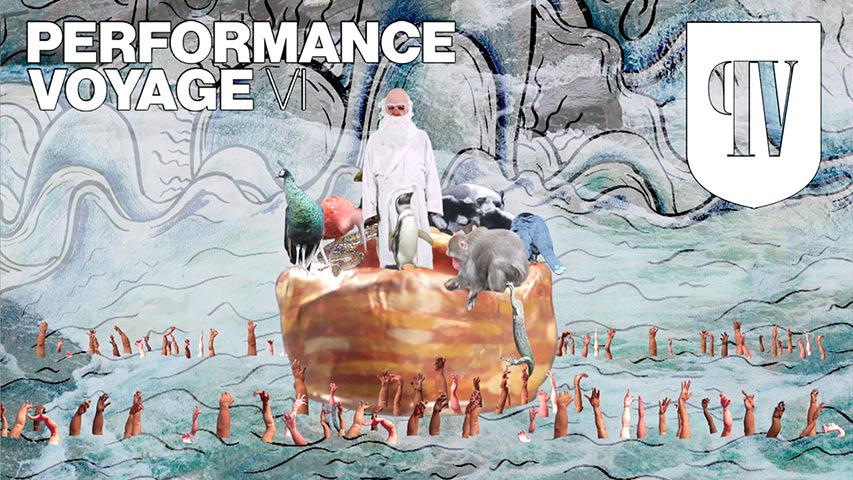
PERFORMANCE VOYAGE 6 Tour
18.4.2016

Artists’ Association MUU presents:

PERFORMANCE VOYAGE 6 Tour

in Toolbox: Monday, 18.4. 8pm

A series of international video performances on the theme of ‘Future/Tomorrow’

http://www.facebook.com/events/1582037878782581

The videos for this year’s Performance Voyage have been published and the project has started its world tour. The collection is a series of international video performances produced by Artists’ Association MUU. The premiere exhibition at the Finnish Institute in Stockholm was festively opened on the 10th of March.

The next screening will be held on the 18th of April in the Projektraum TOOLBOX – Finnish-German Art Space, Berlin, Germany.

The tour compilation of 14 video performances will be shown as a part of the international Index Performance Festival. The spring season’s other tour locations include Wrocław.


Performance Voyage 6 artists:

Caroline Blais (Canada),

James Duesing (USA), Roberto Fassone (Italy), Rick Fisher & Don Rice (Canada), Andrew de Freitas (New Zealand/Canada/Brazil), Stefan Hurtig (Germany), Henri Hütt (Estonia), Linda Lenssen (The Netherlands), Michael Mallis (USA), Roberta Orlando (Italy), Johanna Reich (Germany), Pia Sirén (Finland), Niko Skorpio (Finland), Willem Wilhelmus (The Netherlands/Finland) & Tomasz Szrama (Poland/Finland).

READ MORE ABOUT THE ARTISTS AND THEIR WORKS:

http://www.muu.fi/site/?p=9465&lang=en

Spring Tour:

  • 11 Mar – 9 Apr: The Finnish Institute in Stockholm, Sweden
  • 18 Mar: Index International Performance Festival, Santo Domingo, Dominican Republic
  • 14 Apr – 17 Apr: FAR OFF art fair, Cologne, Germany
  • 18 Apr: Projektraum TOOLBOX – Finnish-German Art Space, Berlin, Germany
  • 14 May – 5 Jun: ‘AIM Wrocław 2016’, Barbara, Wrocław, Poland

The tour continues in the summer with locations in France, USA, Italy and elsewhere. Additional information later!

READ MORE ABOUT THE TOUR LOCATIONS:

http://www.muu.fi/site/?p=9458&lang=en


The works in Performance Voyage 6 were chosen from submissions received in response to an international open call. The theme Future/Tomorrow inspired artists to explore our ever receding future and search for thing as-yet-to-be, whether future hopes or dystopias of desperation. How do we see the future? What hopes, fears and expectations does it awaken in us? Artists around the world were invited to send in their visions of the future, which could be the literal tomorrow, the world in the year 2050, or something inexplicably far away from us both in time and in space.

The works were selected by a jury composed of Annette Arlander (artist and professor), Juha-Heikki Tihinen (curator, Pro Artibus Foundation) and Timo Soppela (director, MUU).

PERFORMANCE VOYAGE SINCE 2011 – The Performance Voyage project was launched in 2011 as an ancillary event of the Amorph! festival. Since then it has become a staple part of the annual project operations of MUU, and it has increased in prominence every year. The purpose of the Performance Voyage project is also to record and document transitory performances and thereby to extend their life also beyond the moment itself.

Enquiries:

  • muugalleria@muu.fi,
  • +358-(0)9-625 972
  • www.muu.fi

Familie |
25.03. – 23.04.2016

Terhi Heino, Helsinki


Vernissage am Freitag, 25. März 2016 um 19 Uhr / Opening on the 25th of March at 7 pm.

Herzlich Willkommen / Warmly Welcome

TOOLBOX – Finnish Art Space
Koloniestraße 120 | 13359 Berlin Wedding | U-Bahn Osloer Straße

Öffnungszeiten | Opening-times:

  • Di–Sa/ Tue–Sa: 14–18 Uhr

English


Terhi Heino – Familie

Terhi Heino (geb. 1970 in Oulu, Finnland) ist Absolventin der Finnischen Kunstakademie aus dem Jahre 2001. Sie hat ihre Werke in zahlreichen Gruppen- und Einzelausstellungen sowohl in Finnland als auch im Ausland gezeigt (u. a. im Museum für Moderne Kunst Moskau (2007), Kunstzentrum Montbeliard, Frankreich (2014), Galerie Suomesta, Berlin (2011)).
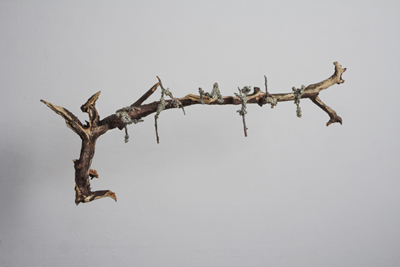
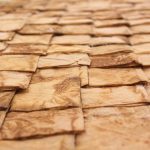
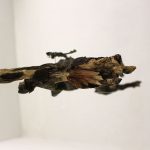
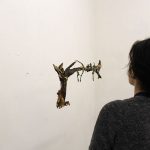
Heino gestaltet ihre Plastiken und Installationen aus Natur- und Recyclingmaterialien. Beispielsweise Teebeutel, Bananenschalen oder Fischflossen verwandeln sich in ihren Händen zu Kunst.
Die Werke dieser Ausstellung erzählen von Familie, verschiedenen Generationen, dem Zerfall von Familien und den damit verbundenen Ängsten und vom Guten und Bösen, die Generationen überdauern.
Die Ausstellung wird unterstützt durch Frame (Zentrum für visuelle Kunst) und Taike (Zentrum für Kunstförderung).

galleriahuuto.net/terhiheino

terhiheino@hotmail.com


Terhi Heino – Family

Sluptures and installations

The works included in the exhibition are about the family, different generations, families falling apart and the related fears as well as the good and bad passed on from one generation to the next. The materials I used are familiar, ranging from the storage containers of the mothers of my generation to a grandfather’s cigar box and chips eaten by her kid.
Terhi Heino (b. 1970, Oulu) graduated from the Department of Sculpture at the Finnish Academy of Fine Arts in 2001. Heino uses natural and recycled materials (used teabags, banana leaves, moss..) in her work. She has had several group and solo exhibitions in Finland and abroad .
Work has been supported by Taike and Frame

galleriahuuto.net/terhiheino

terhiheino@hotmail.com


Image poster

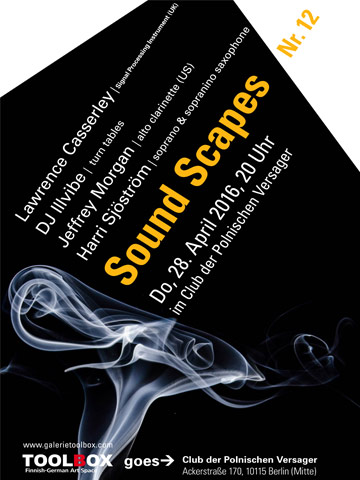
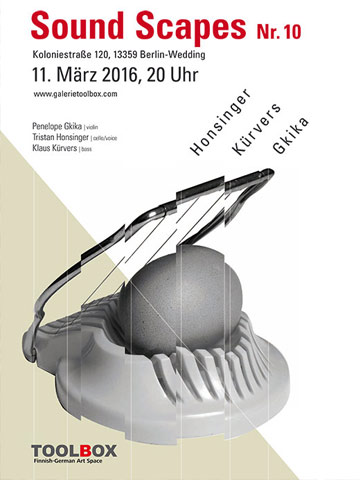
Sound Scapes 12 | 28.4.2016

Sound Scapes Nr. 12

| Do, 28. April 2016, 20 Uhr
im Club der Polnischen Versager (Concert is not in Toolbox Gallery)

  • Lawrence Casserley | Signal Processing Instrument (UK)
  • DJ Illvibe |  turn tables
  • Jeffrey Morgan | alto clarinette (US)
  • Harri Sjöström | soprano & sopranino saxophone
Videostill

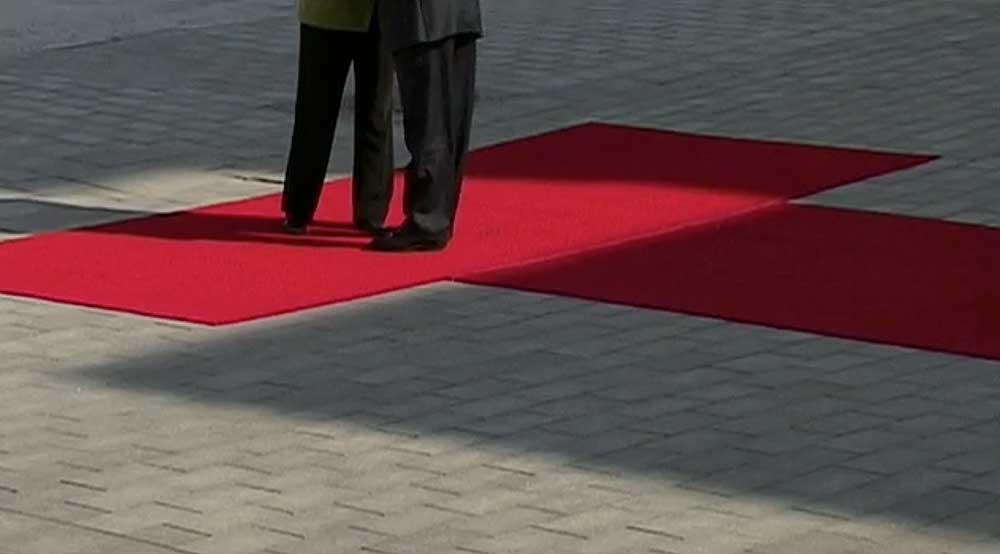
Video: The Red Carpet
26.02. – 19.03.2016

Jörg Hommer: The Red Carpet

 the red carpet ist eine Persiflage auf das Protokoll bei Staatsempfängen, die jeden Tag überall auf der Welt stattfinden und wie man sie im Fernsehen sehen kann: Das berühmte „Hand-Shakes“, „staatsmännisch“ lachende Politiker-Gesichter, symbolisches Gestikulieren. In the red carpet wählt die Kamera allerdings eine ungewöhnliche Perspektive.

Technische Daten

  • 4:35 Minuten | SD | Farbe | stereo | Kurzdoku, Experimentalfilm 2007
  • Regie/Konzept, Kamera, Schnitt: Jörg Hommer, Tonmischung: Holger Jung


Jörg Hommer (* 1978) arbeitet hauptsächlich in den Genres Dokumentarfilm und Installation. Er studierte Kunst an der UdK Berlin (2006–2010) und war 2012/13 Meisterschüler in der Klasse von Thomas Arslan und Heinz Emigholz, Abschluss mit dem Dokumentarfilm The thing behind my Screen (Work in Progress, 2012 bis heute), ein Film über die Wirklichkeit hinter der virtuellen Realität.

Sein Realtime-Film Walk on the edge of democracy wurde beim Internationalen Filmfestival Berlin 2008 im Forum uraufgeführt.

Website Jörg Hommer


Jörg Hommer: The Red Carpet

the red carpet is a persiflage on the protocol pertaining to state receptions, taking place every day, anywhere on earth and constantly shown on TV: the famous ‘shake hands’, politicians’ faces laughing in a ‘statesmanly’ fashion, symbolic gesticulating; though in the red carpet the camera chooses an unusual angle.

Technical data

  • 4:35 min | SD | Colour | stereo | short documentary, experimental film, 2007
  • Direction/Concept, camera, cut: Jörg Hommer, sound mixing: Holger Jung

About

Jörg Hommer (born 1978), primarily works on documentaries and installations. He studied at the University of Arts Berlin (2006–2010) and in 2012/13 attended the Master Class of Thomas Arslan and Heinz Emigholz, where he did his latest Documentary The thing behind my Screen (WiP, 2012-current), about the reality behind the virutal world.

His realtime film Walk on the edge of democracy was premiered at International Filmfestival Berlin in the Forum Section in 2008.

Website Jörg Hommer

Plakat

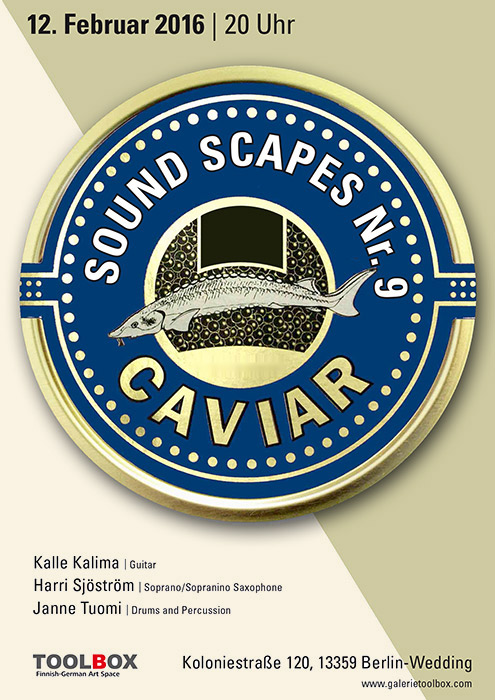
Concert: Quartett
29.3.2016

Konzert: Herzlich Willkommen / Concert: Warmly Welcome

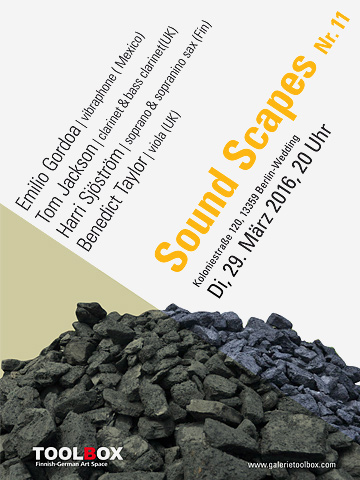
Sound Scapes Nr. 11

Dienstag, 29. März  2016 um 20 Uhr / 29 th of March at 8 pm.

Emilio Gordoa | vibraphone ( Mexico)
Tom Jackson | clarinet & bass clarinet(UK)
Harri Sjöström | soprano & sopranino sax (Fin)
Benedict Taylor | viola (UK)

Konzept der Serie: Harri Sjöström


TOOLBOX – Finnish Art Space
Koloniestraße 120 | 13359 Berlin Wedding | U-Bahn Osloer Straße

Magdalena Alberg Painting

Fences |
26.02. – 19.03.2016

MAGDALENA ÅBERG, Helsinki (Malerei)

Jörg Hommer, Berlin (Video)


Vernissage am Freitag, 26. Februar 2016 um 19 Uhr / Opening on the 26th of February at 7 pm.

Herzlich Willkommen / Warmly Welcome

TOOLBOX – Finnish Art Space
Koloniestraße 120 | 13359 Berlin Wedding | U-Bahn Osloer Straße

Öffnungszeiten | Opening-times:

  • Di–Sa/ Tue–Sa: 14–18 Uhr

English


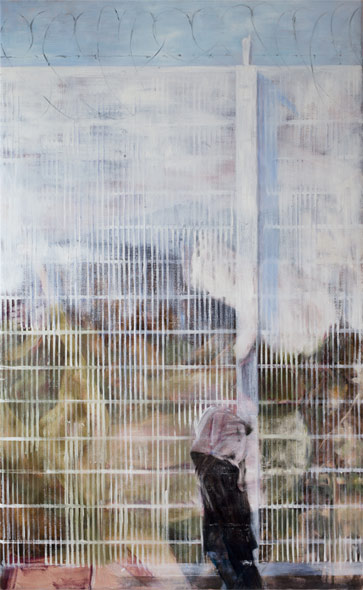
Magdalena Åberg – Fences

Die Künstlerin Magdalena Åberg:

Im letzten Sommer, 2015, Jahrzehnte nach dem Fall der Berliner Mauer, dem Schengener Abkommen und nachdem die europäischen Binnengrenzen durchlässiger geworden sind, begann mit den Flüchtlingsströmen aus dem Süden und Osten eine neue Ära.

Ich verfolgte die Nachrichten und konnte nichts anderes malen als die Bilder aus dem Fernsehen. Ich war von ungarischem spiralförmg gerolltem Stacheldrahtzaun umgeben, während ich im Radio Ballettmusik aus der Zeit des Sonnenkönigs hörte. Kultursitzungen wurden in prunkvoll festlicher Stimmung vorgetanzt; Türken, Indianer, „die Wilden“ in französischen Klängen beschrieben. Und das Gemälde, an dem ich arbeitete, erschien mir als eine Art von ungarischem oder finnougrischem Tanz. Eine dicke Schicht Titanweiß drängte immer mehr danach, den Stacheldraht glänzend und glitzernd zu malen, als karnevalesk tanzendes Wirrwarr. Da, darunter, verschwommen, Hände und Hosenbeine, kaum sichtbar auf der anderen Seite, unter dem Glitter.


Magdalena Åberg (geb. 1972), eine finnische Künstlerin, malt überwiegend mit Ölfarben.

Als die Krise sich am Ende des Sommers zuspitzte und näher kam, hatte sie Schwierigkeiten mit den Motiven, an denen sie gerade arbeitete. Sie fühlte, dass sie sich mit dem schwierigen Thema beschäftigen musste, und nach verschiedenen Versuchen entstand die Serie Fences. Als Finnin und Europäerin ist die Künstlerin unvermeidlich ein Teil der „Festung Europa“. Wie fühlt sich das an? Wie kann man das überhaupt verstehen?


Magdalena Åberg – Fences

The artist Magdalena Åberg:

Decades after the fall of the Berlin Wall, the signing of the Schengen Agreement and the breaking up of borders in Europe, a new era started as the great streams of refugees streaming in from the south and the east this past summer of 2015. I was following the news and had to paint based on the images that came across the news. I was engulfed by Hungarian spiral barbed wire fences while I was listening to ballet music from the time of the Sun King on the radio. Cultural meetings were danced forth in a pompous festive spirit; Turks, Native Americans, „the Savages“ were described in French tones. And I experienced the painting I was working on as if it were some sort of Hungarian or Finno-Ugric dance. A thick layer of titanium white, ever more, wanted to paint the barbed wires glistening and glittering, as a carnivalesque dancing chaos. There, underneath, vaguely, hands and trouser legs barely visible on the other side, under the glitter.


Magdalena Åberg (born 1972), a Finnish artist, primarily works in oil and was, at the end of that summer when the crisis was growing and coming ever closer, having problems continuing on with the motifs she was working on at the time. She felt a pressing need to try to paint the difficult subject, and after various discarded attempts the series Fences came into existence; paintings with barbed wire fences as motif. As a Finn and European, the artist is unavoidably a part of the ‘Fortress Europe’: How does it feel? How is she supposed to understand this?


Menagerie, Tiere im Zoo der Kunst

Menagerie | Call For Artworks

Menagerie
Tiere im Zoo der Kunst

English Version: please scroll down

Einsendeschluss für Eure Bewerbungen ist der 18. März 2016

Ausstellungsdauer: 29.4. – 21.5.    Opening: Freitag 29.4., 19:00 Uhr

Toolbox | Finnisch-Deutscher Projektraum Berlin


Liebe KünstlerInnen,

ständig laufen sie uns über den Weg, werden gestreichelt, gekocht, sind die Liebsten, die, die immer zuhören, nie ein Wort sagen und doch reden wir immer wieder mit ihnen. Sie fliegen über uns, erinnern uns an den Frühling, haben bizarre Formen, schlafen ständig, leben mitten in der Stadt im Freien, miauen uns enigmatisch an, kläffen durch die Wand und das mitten in der Nacht. Sie laufen uns hinterher oder leben in anderen Rudeln, sie sind Fleischfresser, Kannibalen oder Vegetarier. Und sie sind als erste abgebildet worden in den Höhlen von ganz früher.

Und wir wollen sie: Für unsere Gruppenausstellung „Menagerie | Tiere im Zoo der Kunst“ sind wir auf der Suche nach künstlerischen Werken, die Tiere zum Thema haben.

Vögel, Fabeltiere und Amphibien in allen Medien sind erwünscht. Besonders mögen wir Säugetiere. Vom Flohzirkus ist Abstand zu nehmen.

Bitte leitet doch diese E-Mail weiter, wenn Ihr jemanden kennt, der oder die schon zu Tieren gearbeitet hat.

Toolbox | Finnisch-Deutscher Projektraum Berlin
Koloniestraße 120
13359 Berlin
www.galerietoolbox.com

Einsendeschluss für Eure Bewerbungen ist der 18. März 2016

Bitte die Vorschläge per Mail an Anna E. Wilkens / Andreas Wolf
E-Mail: mail@galerietoolbox.com


Menagerie
Animals in the Art Zoo

Deadline for proposals March 18, 2016
Exhibition: April 29 – May 21, 2016    Opening. Friday, April 29, 7 pm

Toolbox Finnish-German Art Space Berlin


Dear Artists,

they are our roommates or next-door neighbours, they get caressed, cooked, they are our dearest; they are the best listeners and never contradict us; we encounter them in flocks, packs, schools, sounders; they fly over our heads and remind us of spring; they come in bizarre shapes, are permanently asleep, live in the middle of the city, eat our roofs or rustle in them; they meow enigmatically or bark thunderingly in the middle of the night. They are carnivores, cannibals, vegetarians or vegans, and they are the very first to have been painted in those ancient caves.
We want them: for our group show “Menagerie | Animals in the Zoo of Art” we are looking for artworks on the subject of animals.

We are looking for pets, wildlife, mythical creatures; birds, mammals, reptiles (etc.) in all media of art.

Please feel free to forward this e-mail to friends and acquaintances whom you know to have worked on the topic of animals.

Toolbox | Finnish-German Art Space Berlin
Koloniestraße 120
13359 Berlin
www.galerietoolbox.com

Deadline for proposals March 18, 2016

Please send your proposals via e-mail to Anna E. Wilkens / Andreas Wolf
E-Mail: mail@galerietoolbox.com

Thomas Nyqvist

Ruins of sorts |
29.01. – 20.02.2016

THOMAS NYQVIST, Helsinki (Malerei)

Video: Karen Koltermann, Berlin


Vernissage am Freitag, 29. Januar 2016 um 19 Uhr / Opening on the 29th of January at 7 pm.

Herzlich Willkommen / Warmly Welcome

TOOLBOX – Finnish Art Space
Koloniestraße 120 | 13359 Berlin Wedding | U-Bahn Osloer Straße

Öffnungszeiten | Opening-times:

  • Di–Sa/ Tue–Sa: 14–18 Uhr

English


Thomas Nyqvist – Ruins of sorts

Thomas Nyqvist (geb. 1955) hat auch früher schon in seinen großformatigen Gemälden brutal schöne Ansichten städtischer Randzonen dargeboten. Er entführte uns auf eigentümliche Wege und ließ uns die Schönheit von Industriezonen, Abrissbaustellen und schmutzigen Schneematschflächen bestaunen.

In seiner neuen Bilderserie Ruins of sorts präsentiert er uns eine Art Ruinenkunst. Zwar stellen die Gemälde authentische Abrissbaustellen des heutigen Helsinki dar, doch könnte man die Bilder fast als apokalyptische Ansichten vom Jüngsten Gericht charakterisieren. Mächtige eingebrochene Betonplatten, Ziegelschutt, verbogene Armierungsstahlstangen und dunkle Baumsilhouetten verleihen den Anblicken Dramatik und Gewalt. Ausgangspunkt dieser Visionen sind die massiven baulichen Umwälzungen an den Meeresstränden von Helsinki. Komplette Stahlbeton-Industriebauten weichen feinen Wohnvierteln. Gleichzeitig schafft Nyqvist es, ganz nebenbei Assoziationen mit antiken Ruinen zu erwecken. Zerbrochene und zerfallene Betonträger erinnern an umgestürzte Marmorsäulen.

Ruinen gelten schon immer als Symbole der Vergänglichkeit. Auch diese eindrucksvollen Gemälde werden zu universellen Bildern der Zerstörung und zu einem Menetekel des unvermeidlichen Schicksals unserer Kultur. In diesem Sinne sind sie zeitlos und aktuell zugleich. Die Bildserien von Zerstörung und Niedergang hängen organisch auch mit unserer Zeit zusammen. Krieg, Terrorismus, der Zusammenbruch des Realsozialismus, die Umweltkrisen und die Rezession brachten Zerstörung und Ruinen in unser Umfeld. Andererseits lassen sich diese Phänomene gerade mit Ruinenbildern thematisieren. Die Künstler in Europa und den USA haben in den letzten Jahrzehnten zum Beispiel verödete menschenleere Stadtteile, leer stehende Fabrikgebäude und nach dem kalten Krieg aufgegebene Militärstützpunkte abgebildet. Der bekannte Schriftsteller W.G. Sebald hat derartige Umgebungen erkundet und dabei über den Stand der Kultur nachgedacht. Im Bereich der bildenden Kunst wird viel mit Mitteln der Fotografie und des Films gearbeitet, doch Thomas Nyqvist ist ein urbaner Entdeckungsreisender, der seine visuellen Wahrnehmungen in großformatigen Gemälden festhält.

Thomas Nyqvists Ölgemälde sind als Kunstwerke eindrucksvoll. Seine Farbwelt ist bis hin zur dramatischen Thematik durchdramatisiert. Durch die gedämpfteren Farbschichten hindurchscheinend, setzen die indigoblauen oder kräftig roten Grundierungen das von Beton und Ziegelschutt geprägte Landschaftsbild geradezu unter Spannung. Die Dramatik und die Bedrohlichkeit der Gemälde von Nyqvist wird durch seine souveräne Pinselführung gefiltert. Er schafft aus der Tradition der bildenden Kunst, der filmischen Formensprache und der Kenntnis seiner eigenen Zeit eine persönliche Synthese.

Ville Lukkarinen, Kunsthistoriker


Thomas Nyqvist – Ruins of sorts

Thomas Nyqvist (born 1955) has earned a reputation for creating large paintings depicting the harsh beauty of urban landscapes. He has taken us down strange paths to reveal the poetry of Helsinki’s old industrial areas, demolition sites and snow-covered fields.

His latest series of paintings Ruins of sorts continues his exploration of the art of ruins. While the new paintings depict actual demolition sites in contemporary Helsinki, they can be viewed as almost apocalyptical visions of judgement day. Massive collapsed concrete slabs, piles of bricks, twisted steel reinforcement bars and the dark silhouettes of trees create dramatic and violent scenes. His visions are based on the ongoing transformation and redevelopment of Helsinki’s shoreline districts, where entire industrial plants are making way for new residential buildings. Nyqvist also succeeds in creating associations almost furtively with ancient ruins. Collapsed and broken concrete pillars are like fallen marble columns.

Throughout the ages, ruins have symbolised transience. Nyqvist’s impressive paintings are transformed into universal images of destruction and also warnings about the unavoidable fate of our culture. In this sense they are both timeless and topical. Depictions of destruction and decay are very much a part of our times. War, terrorism, the collapse of real socialism, ecological crises and economic recession have created the destruction and ruins that surround us. At the same time, images of ruins allow us to process these phenomena. In recent decades European and American artists have depicted suburbs that have been deserted by their residents, desolate factory buildings and disused Cold War military bases, for example. German writer and academic W.G. Sebald too has wandered through these kinds of environments pondering the state of culture. Within the visual arts this work has been done a lot through photography and moving pictures, while Thomas Nyqvist is an urban explorer who paints what he sees on large canvases.

As works of art, Thomas Nyqvist’s oil paintings are truly impressive. His increasingly dramatic use of colours matches the dramatic themes of his works. Indigo-blue and powerful red bases radiate through more subdued layers of colour, electrifying the urban landscapes characterised by concrete and broken bricks. The dramatic and threatening nature of Nyqvist’s paintings is transmitted through his scintillatingly skilful brushwork. He has built on the tradition of painting, the expressive language of film and an acute awareness of his own time to create his own personal synthesis.

Ville Lukkarinen, Art Historian