Opening Fri 28 August 2026: 7–10 pm Performance on the opening by Kainulainen & Latva at arround 8 pm
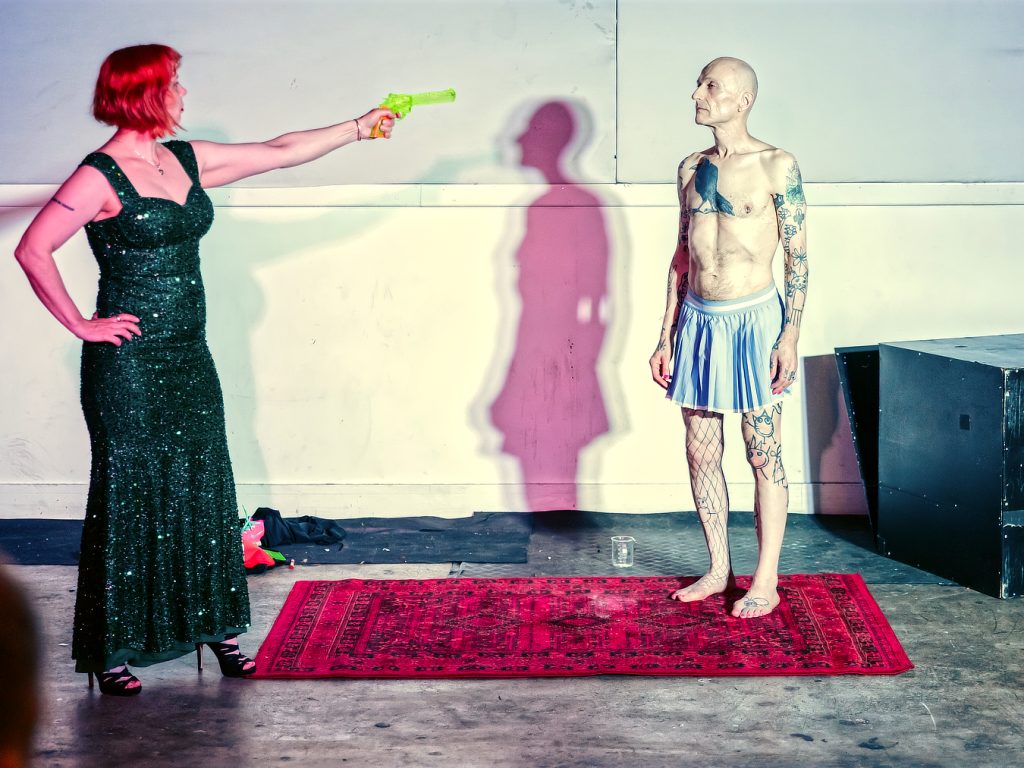
Kainulainen & Latva: Untitled (Pisstol) London, 2026 Future Ritual: DISCHARGE, hosted by IKLECTIK. Photo by Henri T
Open on Kolonie Weekend Sat 29.8.: 2–5 pm Sun 2308.: 2–5 pm
Exhibition: 29.8..–18.9.2026
Opening hours: Tue–Fri 2–6 pm
Maximilian Latva
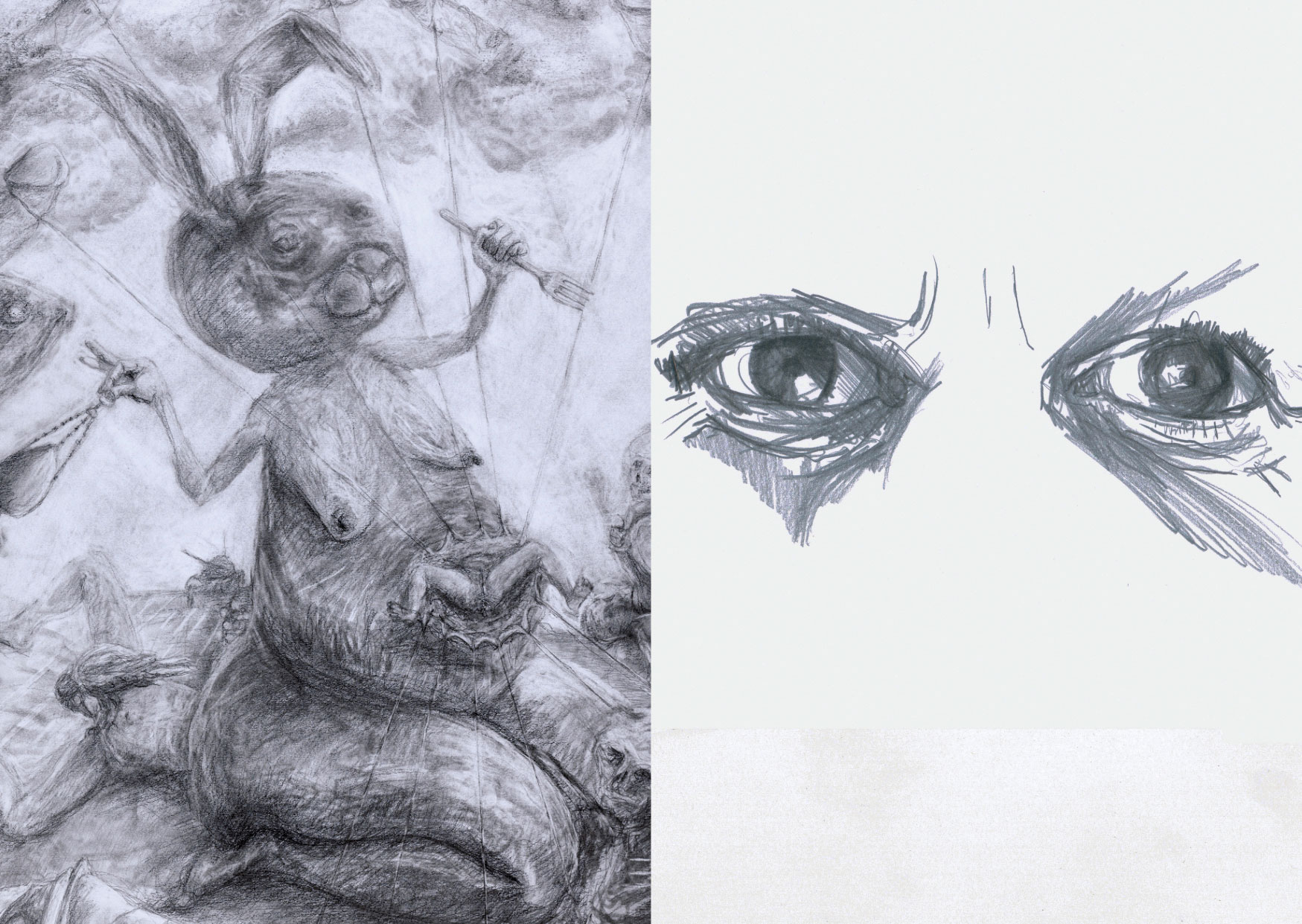
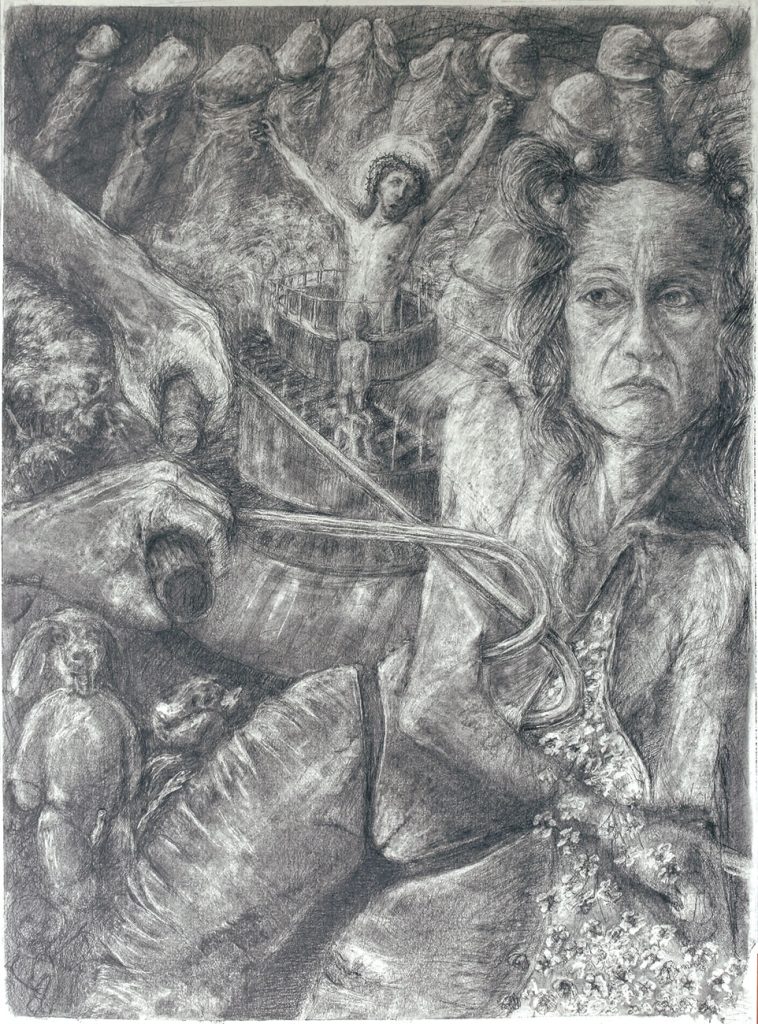
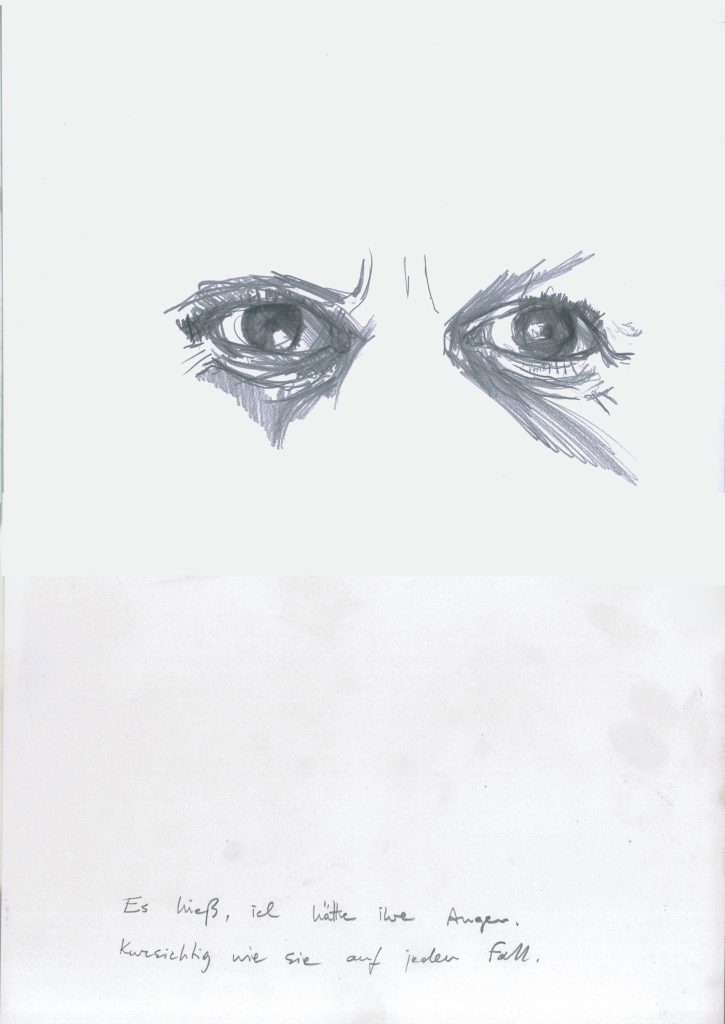
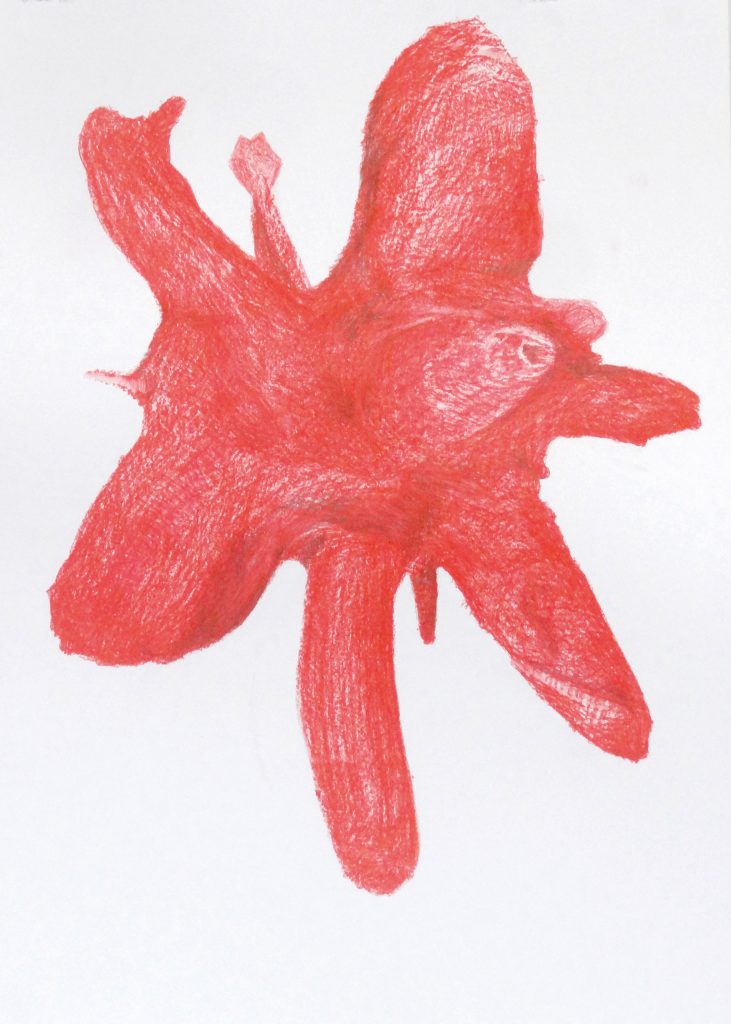
Please Please Me is a series of drawings, made during 2026 with pencil and craphite dust on paper.
artwork on top. Inner Beauty Pageant Runner-up, pencil and graphite dust on paper, 75 x 55 cm, 2026
Please Please Me. The smiling voice, the bouncy beat, over and over. That’s the song I used to dance to, alone, as a kid. It was the only record with a pulse among the few dusty vinyls my mom had, so I danced to it even though I didn’t really like it. Maybe the rhythm let me escape the shame and pain in my body for a while.
The record of my childhood got scratched early on. It keeps skipping back, and the past becomes the present again and again. Paper scratches too. Pencil drawing is raw and bare, hiding nothing. Graphite has no undo function, mistakes can’t be completely erased, but they can lead to new things. These imperfections become guides to my unconscious, revealing secrets I have no words for.
Latva
CV; Maximilian Latva (b. 1966) is a Finnish artist. Based in Helsinki, Latva works with drawing, performance art and sound. As a performance artist, they have collaborated with Katri Kainulainen in the duo Kainulainen & Latva since 2014. In 2026, Maximilian was granted a 5-year working grant by the Finnish Arts and Culture Agency. Link to Curriculum Vitae
Ralf Tekaat, born in 1970 in Bobingen, Germany, studied Visual Communication before studying Fine Arts at the Hochschule für Künste Bremen from 1997 to 2002 under Wolfgang Schmitz and Paco Knöller. After graduating, he continued his studies as a Meisterschüler (postgraduate master student) under Paco Knöller in 2002. Since 2005, Tekaat has taught at both the Hochschule für Künste Bremen and the University of Bremen as part of several teaching appointments. His work has received various awards and grants, including a grant in 2017 for a working residency in Spitsbergen, Norway. In 2026, he is scheduled to undertake a working residency in the Atacama Desert in Chile. Tekaat lives and works in Berlin.
Tekaat’s artistic practice is primarily rooted in drawing and focuses predominantly on works on paper. In his large-scale pencil drawings, pictorial objects gradually emerge from densely layered cross-hatching, creating the impression of a slow, almost sedimentary process of construction. In contrast, his expansive wall installations shift the focus towards narrative structures. Here, Tekaat connects autobiographical fragments with images from collective memory, creating complex and multilayered visual spaces of narration.
In his installation Hidden Track, – shown at Toolbox – Tekaat addresses the early death of his mother. She died of cancer more than 30 years ago.
When he remembers her, he always sees her as she was when she was already ill, rather than as she was when she was still healthy and carefree. The period during which she was severely affected by cancer was actually short, but it has come to dominate his memory of her.
One evening, while watching the Beatles film A Hard Day’s Night, he thought he saw his mother among the screaming crowd. Could it have been her? In 1963, in her early twenties, she spent an extended period in England as part of an exchange programme. The details of her time there had to remain secret, at least from her parents, even later on. This could explain why the concert was never spoken about either. Just as the illness was never talked about. In the work, the illness is connected with and set against the music of the Beatles, which for Tekaat represents a so-called “safe place”.
In fragmentary moments, he recalls incidents from his childhood and adolescence with his mother. Moments in which the illness, which was otherwise never spoken about in his presence, gradually seeped into what had seemed to be an untroubled family life. He tries to make the possibility that his mother really did have a brief, screaming, blissful appearance in that Beatles film seem real.
Ralf Tekaat, geboren 1970 in Bobingen, studierte Visuelle Kommunikation, bevor er von 1997 bis 2002 Freie Kunst, an der Hochschule für Künste Bremen bei Wolfgang Schmitz und Paco Knöller, studierte. Nach dem Diplom schloss sich 2002 ein Meisterschülerstudium bei Paco Knöller an.
Seit 2005 war Tekaat im Rahmen mehrerer Lehraufträge sowohl an der Hochschule für Künste Bremen als auch an der Universität Bremen tätig. Seine Arbeit wurde mit verschiedenen Preisen und Stipendien ausgezeichnet; 2017 erhielt er unter anderem ein Stipendium für einen Arbeitsaufenthalt auf Spitzbergen (Norwegen). 2026 ist ein Arbeitsaufenthalt in der Atacama Wüste in Chile geplant. Tekaat lebt und arbeitet in Berlin.
Tekaats künstlerische Praxis ist primär zeichnerisch geprägt und konzentriert sich überwiegend
auf Arbeiten auf Papier. In seinen großformatigen Bleistiftzeichnungen entstehen die Bildobjekte sukzessive aus dicht gelagerten Schraffurschichten, die den Eindruck eines langsamen, beinahe sedimentären Aufbaus vermitteln. Demgegenüber verschiebt sich in den raumgreifenden Wandinstallationen der Fokus hin zu narrativen Strukturen: Hier verknüpft Tekaat autobiografische Fragmente mit Bildern des kollektiven Gedächtnisses und erzeugt so vielschichtige visuelle Erzählräume.
In seiner Installation Hidden Track, die er bei Toolbox zeigt, thematisiert Tekaat den frühen Tod seiner Mutter. Vor über 30 Jahren starb sie an Krebs. Wenn er sich an sie erinnert, sieht er sie immer nur vor sich, als sie schon krank war, und nicht so, wie sie war, als sie noch gesund und unbeschwert war. Dabei war die Zeit, in der sie von dem Krebs stark gezeichnet war, nur kurz, aber eben dominierend.
Als er eines Abends den Beatles-Film A Hard Day’s Night sah, dachte er, seine Mutter in der kreischenden Menge zu sehen. Könnte sie es gewesen sein? Sie war 1963, mit Anfang 20, für längere Zeit im Rahmen eines Austauschs in England. Die Details davon mussten, zumindest vor ihren Eltern, auch später noch geheim gehalten werden. So wäre zu erklären, wieso auch über jenes Konzert nie gesprochen wurde. So wie auch über die Krankheit nicht geredet wurde.
In der Arbeit wird die Krankheit mit der Musik der Beatles, die für Tekaat ein sogenannter „sicherer Ort“ ist, verknüpft und ihr gegenübergestellt.
Bruchstückhaft, in kurzen Momenten, erinnert er sich an Begebenheiten seiner Kindheit und Jugend mit seiner Mutter. Begebenheiten, in denen die Krankheit, über die sonst in seiner Gegenwart nicht gesprochen wurde, mehr und mehr in das scheinbar ungetrübte Familienleben einsickerte. Er versucht, die Möglichkeit, dass seine Mutter tatsächlich in jenem Beatles-Film einen kurzen, kreischenden und glückseligen Auftritt hatte, als wahr erscheinen zu lassen.
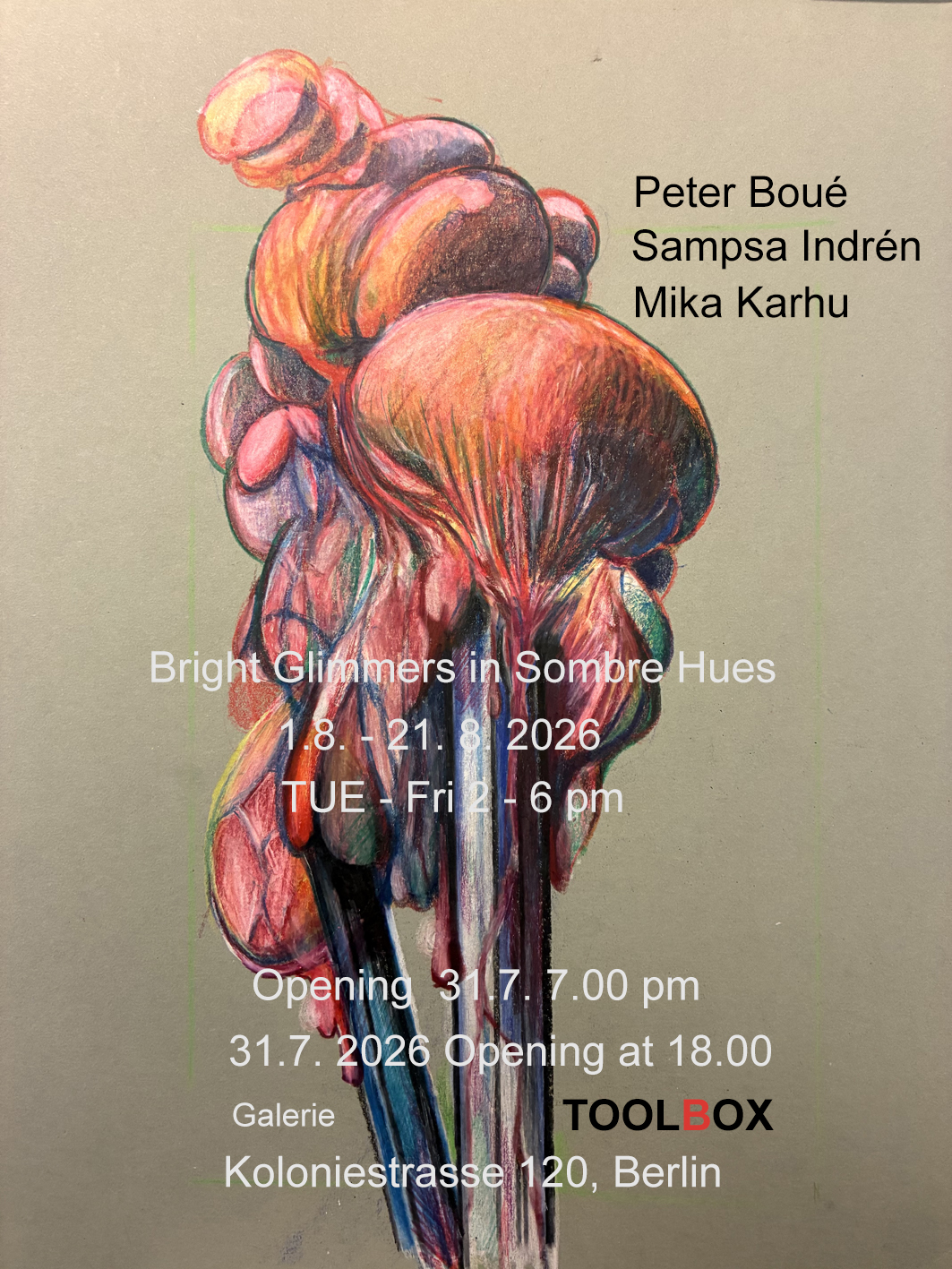
Galerie/Projektraum TOOLBOX presents the exhibition Bright Glimmers on Sombre Hues
Artists: Peter Boué, Sampsa Indrén, Mika Karhu
Opening Fri 31 July 2026: 6–10 pm
Open on Kolonie Weekend Sat 1.8.: 2–5 pm Sun 2.8.: 2–5 pm
Exhibition: 1.–21.8.2026
Opening hours: Tue–Fri 2–6 pm1.8.–21.8.2026
Light never exists in isolation. It becomes perceptible only in its encounter with shadow. Likewise, the world does not disclose itself as a completed whole but through fractures, interruptions, and fleeting illuminations that emerge from the darker fabric of experience. Bright Glimmers on Sombre Hues explores these fragile moments—not as opposites to darkness, but as possibilities that arise from within it.
The works gathered in this exhibition resist reconciliation. They inhabit a terrain where meaning remains unfinished and reality refuses stable interpretation. Their luminous moments do not lead us beyond darkness; rather, they render its structure visible. Illumination here is neither revelation nor redemption, but a brief suspension in which the familiar world becomes estranged from itself, allowing another way of seeing to emerge.
In art, light is more than an optical phenomenon; it is a mode of thought. It marks the instant when habitual perception falters and experience opens toward what has not yet been named. The artwork offers no resolution. Instead, it constructs a space in which the world may be encountered anew—not as an object to be mastered, but as an event unfolding between material, memory, history, and perception. Meaning resides neither in the work nor in the viewer alone, but in the dynamic relation that continually forms between them.
This exhibition rejects optimism as the antidote to darkness. Hope is conceivable only where the contradictions of the world remain visible. Beauty does not arise from promises of harmony but from the capacity to dwell within incompleteness without dissolving it into certainty. Every bright glimmer is a temporary interruption in the sombre hues of existence—a moment in which something still unnamed becomes perceptible.
Bright Glimmers on Sombre Hues invites us to remain within this tension. Light never abolishes shadow, nor does shadow extinguish light. Together they constitute the horizon through which experience acquires depth and complexity. In these fleeting illuminations, art reveals what conceptual thought alone cannot fully grasp: meaning does not exist beyond contradiction but emerges through its continuous movement.
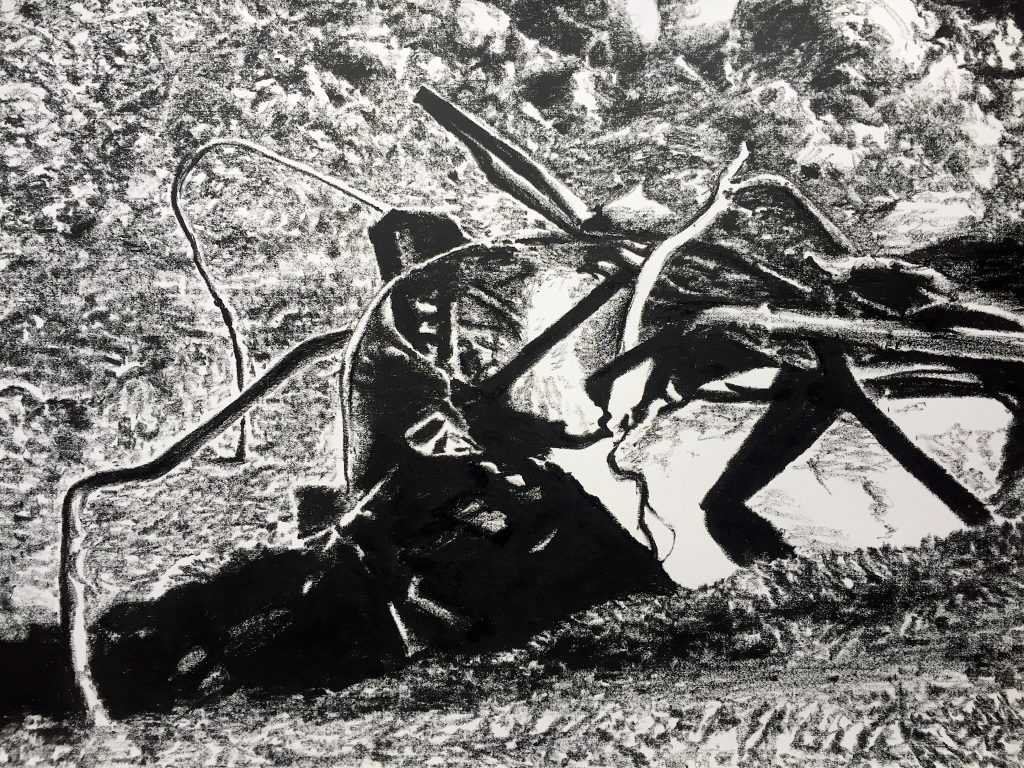
Artwork: Überrest, 2021, Fettkreide auf Karton | oil pastel on cardboard,, 70×100 cm
In ihrer Reduktion auf den Schwarz-Weiß-Kontrast führen die Zeichnungen die dargestellten Orte und Szenen auf ihre Grundelemente zurück. Zugleich rücken sie die magischen Momente, das üblicherweise Ausgeblendete in den Fokus. Sie leuchten den Wirklichkeitsgehalt des Surrealen aus. Sie suchen die Realität in einem Schattenreich. Der Schwarz-Weiß-Kontrast verstärkt den Charakter des Unwirklichen.
Der Schatten entstammt nicht einer konkreten Lichtquelle, er ist häufig deutlicher als der Gegenstand selbst beziehungsweise nimmt fast die Gestalt von Figuren an, mutiert zum aktiven Element. Ebenso erscheint das Licht in einer eigenen Gegenständlichkeit auf einer Skala zwischen Glimmen und gleißenden Flammen. So treten Licht und Schatten als Akteure auf, die ihr jeweiliges Erscheinungsbild aus sich selbst speisen. Mit Schattierungen modelliert Boué eine diffuse Gegenständlichkeit, die sich dem Auge zugleich anbietet und entzieht.
—————————
In their reduction to black-and-white contrast, the drawings reduce the depicted places and scenes to their basic elements. At the same time, they bring the magical moments, the things that are usually hidden, into focus. They illuminate the reality of the surreal. They seek reality in a realm of shadows. The black-and-white contrast reinforces the character of the unreal.
The shadow does not originate from a specific light source; it is often clearer than the object itself or almost takes on the form of figures, mutating into an active element. Similarly, light appears in its own objectivity on a scale between glimmering and glistening flames. Thus, light and shadow appear as actors that feed their respective appearances from within themselves. With shades, Boué models a diffuse objectivity that simultaneously presents itself to the eye and eludes it.
In den letzten Jahren scheint die Welt unwiderruflich verrückt geworden zu sein. Russland marschierte in die Ukraine ein und im Gazastreifen brach der Krieg aus. Trump griff den Iran an. Finnland (2023) und Schweden (2024) traten überstürzt der NATO bei. 2025 trat Finnland aus dem Ottawa-Vertrag (Minenverbotsvertrag) aus. Nordkorea schloss sich dem Krieg gegen die Ukraine an. Ein neuer Kalter Krieg begann und Die Raketen Nordkoreas und Russlands sind auf die NATO-Mächte gerichtet, also auch auf uns.
In Helsinki hörte ich im Nahverkehrszug leichtfertig über Putins Bombenangriffe sprechen und fragte mich, wann es wohl auch hier (in Finnland) so weit sein würde. Der finnische Rundfunk (YLE) zeigt seit Jahren Filme und Dokumentationen über den Krieg. Wenn ich die YLE-Programme sehe, kommt mir unweigerlich der Gedanke, dass wir Finnen uns auf einen Krieg vorbereiten. Konkrete Vorbereitungen laufen bereits: So baut beispielsweise der finnische Sprengstoffhersteller Forcit in Pori eine TNT-Fabrik, in der auch genügend Material für Antipersonenminen produziert werden kann.
In Finnland hat sich die allgemeine Stimmung innerhalb weniger Jahre in Richtung Aufrüstung gewandelt. Waffen werden positiv dargestellt. Stanley Kubricks Film „Dr. Seltsam oder: Wie ich lernte, die Bombe zu lieben“ aus dem Jahr 1964 ist heute wieder aktuell. Der Film ist eine politische Satire und schwarze Komödie über den Schatten der Atombombe. Indiens erster erfolgreicher Atomtest am 18. Mai 1974 trug den Namen „Lächelnder Buddha“, der vom US-amerikanischen Militärgeheimdienst den Codenamen „Happy Krishna“ erhielt. Warum lächeln Raketen und Bomben? Woher kommt diese Widersprüchlichkeit? Was bringt uns zum Lächeln angesichts der drohenden Selbstzerstörung?
Wir müssen dieser gängigen Meinung jedoch nicht zustimmen. Wir können anders denken. Doch inmitten dieser Dunkelheit gibt es Licht, das in den Herzen der Menschen und ihrer Lebenslust zu finden ist. Jeder Mensch ist ein Licht in dieser Dunkelheit. Dunkle Zeiten schaffen einen Kontext für das Leben, aber wir sollten diese Düsternis mit Lebensfreude überwinden – genau das möchte diese Ausstellung vermitteln. Freude sollte jeden Tag im Atelier zu finden sein, und ein Hauch von Freude sollte in jedem Kunstwerk spürbar sein.
Jukka Korkeila (geb. 1968 in Hämeenlinna) zählt zu den bedeutendsten Malern Finnlands. Seine Werke wurden in zahlreichen Museen und Galerien weltweit ausgestellt. Er lebt und arbeitet an drei Orten: Berlin, Glauburg-Stockheim und Helsinki. Korkeila hat an Ausstellungen in ganz Europa teilgenommen, und alle wichtigen nordischen Sammlungen führen seine Arbeiten. Er hatte Einzelausstellungen im Moderna Museet in Stockholm und im Nordischen Aquarellmuseum in Skärhamn, Schweden. 2014/15 nahm Korkeila an der vierten Biennale del Fin del Mundo in Mar del Plata, Argentinien, teil. 2017–2018 nahm er an der umfangreichen Retrospektive „Pleasure“ im Kunstmuseum Helsinki (HAM) und im Serlachius Museum in Mänttä teil. 2018 war Korkeilas Werk in der von Luc Tuymans kuratierten Ausstellung „Sanguine/Bloedrood“ im Museum für Zeitgenössische Kunst Antwerpen (MHKA) in Belgien vertreten. 2019 wurde Korkeila mit dem finnischen Staatspreis für Bildende Kunst ausgezeichnet. 2022 nahm Korkeila an der Biennale „Le Latitudini dell’Arte V ed. Sweden and Italy“ im Palazzo Ducale in Genua teil, kuratiert von Paul Thomassen. Ebenfalls 2022 war Korkeila an der von Max Hannus kuratierten Ausstellung „Dreamy“ im Museum für Zeitgenössische Kunst Kiasma in Helsinki beteiligt. Im Jahr 2023 wurden seine Gemälde aus der Sammlung des Kunstmuseums Malmö in die Ausstellung „Happily Ever After“ im Kunstmuseum Malmö aufgenommen, kuratiert von Julia Björnberg und Anna Johansson. 2024 wurde das Gemälde „Art of Falling Apart“ aus der Sammlung des Moderna Museet in Stockholm in der Ausstellung „Den Tredje Handen, Maurizio Cattelan and Moderna Museet’s collection“ im Moderna Museet gezeigt, kuratiert von Maurizio Cattelan. 2025 fand im Kunstmuseum Hämeenlinna in Hämeenlinna, Finnland, eine große Retrospektive von Korkeila mit dem Titel auf Finnisch „Pimeys on täynnä valoa“ (Die Dunkelheit ist voller Licht) statt, kuratiert von Soile Ollikainen. In Berlin fand auch eine gleichnamige Ausstellung bei Wolf & Galentz im Herbst 2025 statt.
Michael Kirkham
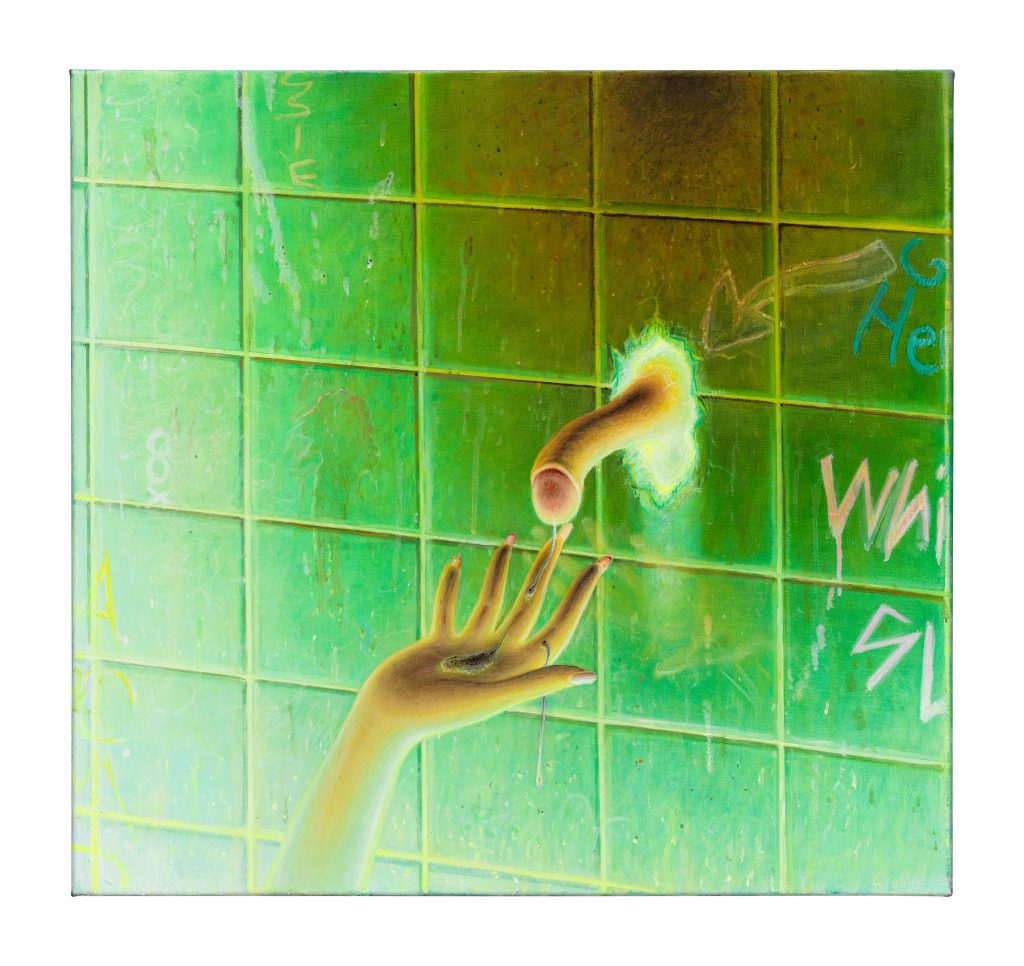
Abb.: Gloryhole 2, Michael Kirkham
Diese Präsentation mit dem Titel „Eine Kleine Riss“ zeigt – begleitend zu Jukkas Einzelausstellung in der Toolbox – vier kleinformatige Gemälde und thematisiert mithilfe stark kontrastierender negativer Farbschemata, wie Licht aus Bildschirmen, Fenstern, Öffnungen, Mündungen und Löchern entweicht oder strömt. Text (einschließlich Auszügen aus dem Interview mit George Kratochvil vom 22. März 2026)
„Das Sehen funktioniert ganz ähnlich wie eine Kamera: Wenn Licht ins Auge fällt, wird es von der Linse auf den Sehnerv projiziert. Fotografien oder Filme beispielsweise sind mechanische Aufzeichnungen dieses ‚optischen Rohmaterials‘, die jedoch auf digitalen oder chemischen Trägern festgehalten werden. Die Spuren, die das Licht hinterlässt, wirken realistisch; sie erscheinen uns als wahre Abbilder der Welt um uns herum. (Die Tatsache, dass sie mechanisch erzeugt sind, hat dazu geführt, dass sie gewissermaßen als ‚die Wahrheit‘ fetischisiert wurden – eine Auffassung, die natürlich inzwischen durch Photoshop, KI und Ähnliches untergraben wurde.) Dies liegt daran, dass unser visueller Kortex gelernt hat, sie genau als solche zu interpretieren. Diese ‚Objektivität‘ möchte ich in meinen Gemälden aufgreifen und thematisieren. Die Idee, mit Negativfarben zu arbeiten, entsprang diesem Ansatz – vor allem aber resultierte sie aus farblichen Experimenten. Ich bin mir sicher, dass manche Leute dies vielleicht lediglich als einen ‚Trick‘ abtun; tatsächlich besteht die Methode jedoch schlichtweg darin, helle Farben für die Schattenbereiche zu verwenden und von dort aus weiterzuarbeiten. Dies hebt das Gemälde unmittelbar auf eine quasi-abstrakte Ebene; zudem ist es faszinierend zu beobachten, wie Hauttöne in ihrer negativen Darstellung erscheinen – sie sind dabei nicht zwangsläufig grün. Auch sämtliche Unreinheiten auf den Oberflächen werden auf diese Weise ‚erhellt‘, und ebenso wird alles beleuchtet, was eine ‚Vertiefung‘ oder ein ‚Loch‘ darstellt – wie etwa der Mund. Insgesamt eröffnet dieser Ansatz ein hohes Maß an gestalterischer Freiheit im Umgang mit Farben und kann zu äußerst eigenwilligen Farbkombinationen führen. Möglicherweise geht es dabei auch darum, einen Widerspruch zu erzeugen: ein Bild, das zugleich strahlend hell und doch von Melancholie erfüllt ist. Obwohl ich die entsprechende Technik durchaus beherrschte, entwickelte ich irgendwann eine gewisse Ambivalenz gegenüber der naturgetreuen, naturalistischen Wiedergabe von Figuren – sei es nach Modell oder, noch stärker ausgeprägt, nach fotografischen Vorlagen. Schließlich entschied ich mich dazu, gänzlich ohne Vorlagen zu arbeiten: keine gefundenen Fotos, keine Modelle. Meine Bilder sollten fortan als ‚projizierte Bilder‘ im Sinne von inneren Vorstellungen entstehen – als Versuche, etwas zu visualisieren, das physisch gar nicht vorhanden war. Naturalismus oder Realismus reduzieren sich in diesem Kontext auf bloße stilistische Qualitäten – auf Elemente, die man einem Gemälde nach Belieben hinzufügen oder wieder entziehen kann. Infolgedessen gewann die Auseinandersetzung mit dem Surrealismus für mich an Bedeutung – wenngleich ich das Gefühl hatte, dass der Surrealismus in seiner Herangehensweise etwas verfehlt hatte. Er erschien mir zu stark theoretisiert, und seinen Theorien fehlte meines Erachtens ein entscheidendes Element. Genauer gesagt: Die Fantasie ist keineswegs losgelöst von … …die Realität – wie in einem Traum, in dem man nicht bei Bewusstsein ist; wobei die Trennlinie zwischen den Erzeugnissen der Fantasie und den Träumen sicherlich weitaus fließender verläuft. Wer jemals halluzinogene Drogen konsumiert hat, kann bezeugen, wie radikal dabei in die Funktionsweise der Sehrinde eingegriffen werden kann. Es ist, als würde das Gewebe oder die „Matrix“ der banalen Wahrnehmung – die wir als selbstverständlich hinnehmen (um normal funktionieren zu können) – mit Leichtigkeit Risse bekommen oder zerreißen; und es ist ein ziemlicher Schock, ja sogar eine Offenbarung, zu erkennen, in welchem Ausmaß unsere normale, alltägliche Wahrnehmung der Realität tatsächlich eine fragile und kunstvolle Konstruktion darstellt – eine Konstruktion, die beständig aufrechterhalten werden muss. In gewissem Sinne ist also selbst der banale Akt der visuellen Wahrnehmung fortwährend von Fantasie durchdrungen und mit ihr verwoben – und folglich auch mit sämtlichen Emotionen; etwa mit der Furcht vor dem Gesehenen oder dem Begehren nach ihm. Um es noch einmal zu betonen: Es handelte sich hierbei um einen „Surrealismus des Banalen“ – fast wie eine Art „Realitätsverschiebung“ (Reality-Shift) … doch wie genau sieht das aus? Es muss zwangsläufig etwas Visuelles sein, eine spezifische Qualität der Visualität … und somit eher ein Produkt der Intuition als des Intellekts. Was ich hier skizziert habe, ist ohnehin keine eigentliche Theorie, sondern vielmehr ein Ansatz …
English
During the last years the world seems to have gone irrevocably crazy. Russia invaded Ukraine and war broke out in Gaza. Finland (2023) and Sweden (2024) hastily joined NATO. In 2025, Finland withdrew from the Ottawa Treaty (the Mine Ban Treaty). North Korea joined the fight against Ukraine. Trump attacked Iran. A new Cold War began. North Korean and Russian missiles are aimed at NATO powers, then at us.
In Helsinki, I heard people talking carelessly on the local train about Putin’s bombings, so when will it happen here (in Finland)… Finnish Broadcasting Corporation (YLE) has been showing films and documentaries about the war for several years now. When I watch Finnish Broadcasting Corporation’s (YLE´s) programs, it inevitably occurs to me that we Finns are preparing for war. Concrete preparations are already underway: for example, the Finnish explosives manufacturer Forcit is building a TNT explosives factory in Pori, Finland, from which there is also enough material for anti-personnel mines.
In Finland, the general mood has changed to a pro-armament one in a couple of years. Weapons have been given a positive label. Stanley Kubrick’s 1964 film, Dr. Strangelove, or: How I Learned to Stop Worrying and Love the Bomb, is once again relevant. The film is a political satire and black comedy about the shadow of the bomb. India’s first successful nuclear test on May 18, 1974, was named Smiling Buddha, which the US military intelligence codenamed “Happy Krishna.” Why do missiles and bombs smile? Where does this schizophrenia come from? What makes us smile on the verge of self-destruction?
However, we do not have to agree with this prevailing narrative. We can think differently. But amidst this darkness there is light, which can be found in people’s hearts and the lust for life they have. Every person is a light in this darkness. Dark times create a context for life, but we should overcome this gloom with joy of life, which is what this exhibition aims to do. Joy should be found in every day in the studio and glimpses of joy should be found in every work done.
11.5.2026 in Glauburg-Stockheim, Jukka Korkeila.
About
Jukka Korkeila (born 1968, Hämeenlinna) is one of Finland’s foremost painters; his work has been exhibited in various museums and galleries around the world. He lives and works in three places: Berlin, Glauburg-Stockheim and Helsinki. Korkeila has participated in exhibitions around Europe, and all the major Nordic collections include his work. Korkeila has had solo exhibitions at the Moderna Museet in Stockholm and the Nordic Watercolor Museum in Skärhamn, Sweden. In 2014–2015, Korkeila participated in the fourth Biennal del Fin del Mundo in Mar del Plata, Argentina. In 2017–2018, he participated in the extensive retrospective exhibition Pleasure at the Helsinki Art Museum, HAM, and the Serlachius Museum in Mänttä. In 2018, Korkeila’s work was included in the exhibition Sanguine/Bloedrood, curated by Luc Tuymans, at the Museum of Contemporary Art Antwerp (M HKA) in Belgium. In 2019, Korkeila was awarded the Finnish State Prize for visual arts. In 2022, Korkeila participated in the Biennale Le Latitudini dell’Arte V ed. Sweden and Italy at Palazzo Ducale, Genoa, Italy, curated by Paul Thomassen. In 2022, Korkeila participated in the exhibition Dreamy at the Museum of Contemporary Art Kiasma, Helsinki, Finland, curated by Max Hannus. In 2023, his paintings from Malmö Art Museum’s collection were included in the Happily Ever After exhibition at Malmö Art Museum, curated by Julia Björnberg and Anna Johansson. In 2024, the painting Art of Falling Apart from Moderna Museet’s collection was shown – at Den Tredje Handen, Maurizio Cattelan and Moderna Museet’s collection – exhibition at Moderna Museet, Stockholm, curated by Maurizio Cattelan. In 2025, Korkeila had a major retrospective exhibition, Pimeys on täynnä valoa (Darkness is full of light), at the Hämeenlinna Art Museum in Hämeenlinna, Finland, curated by Soile Ollikainen. The exhibition of the same name, Dunkelheit ist voller Licht (Darkness is full of light), coincided with Wolf & Galentz in Berlin last autumn.
Finnish Arts and Culture Authority, who have supported my work.
Michael Kirkham
The Small Tear/Eine Kleine Riss
This presentation entitled “Eine Kleine Riss( A Small Tear”) shows 4 small format paintings alongside Jukka´s solo exhibition at Toolbox,- thematises how light escapes or streams from screens, windows ,openings , orifices, and holes by the use of strong contrasting negative colour schemes. Text (including exerpts ,Interview with George Kratochvil March 22 2026)
“Vision functions a lot like a camera: when light enters the eye it is projected on to the optic nerve by the lens. Photographs or films for example, are mechanical registrations of this “raw optical material” but captured on digital or chemical plates. The traces left by the light look realistic, they seem like true pictures of the world around us. (That they are mechanically produced has led to them being somewhat fetishised as “the truth”— this has of course been now undermined by Photoshop and AI etc).This is because our visual cortex has learned how to turn them in to such .I want to use and refer to this “Objectivity” in my paintings. The origin of using negative colours came out of this but mostly of colour experiments. I´m sure some people might just see it as a “trick” , but actually all it is is using a bright colour in the shadow, and then going from there. It takes the painting immediately on to a quasi- abstract level and it is fascinating how skin colours appear in a negative. They are not necessarily green. Also all the dirt on the surfaces is “lit-up”, and anything that is a “hole” is also illuminated.. mouths for instance. It anyway allows a lot of freedom in colour use , and can result in very weird colour combinations. It may also have something to do with making a contradiction–a very bright but melancholy image. Although rather skilled at it, at some point I developed an ambivalence to faithful, naturalistic reproductions of figures from models etc.,even more so towards painting from photographs. I eventually decided to work from nothing at all: No found photos, no models. They would be “Projected Images” in the sense that I would try to visualise something that was not there. Naturalism or Realism then become just certain qualities among others that can be added or removed from a painting. A relationship with Surrealism became important because of this, although it seemed to me that Surrealism had done it wrong. It was too theoretical and their theories missed something. More specifically: Fantasy is not actually removed from reality-as in a dream where you are not conscious, but that the division between the products of the imagination and dreams is certainly more fluid. Anyone who has ever taken hallucinogenic drugs can report how the visual cortex can be radically interfered with. It’s a though the fabric or “matrix” of banal perception that we take for granted ( in order to function normally )is easily cracked or torn, and it’s rather a shock , even a revelation to notice the extent to which our normal everyday perception of Reality is actually a delicate and elaborate construction: a construction which must be constantly maintained. So in a sense , even the banal act of visual perception is constantly affected and intertwined with fantasy.. and therefore with all emotions. fear or desire for or of what you see for example. To emphasise: It would be a Surrealism of the Banal, almost like a kind of “Reality- Shift”.. but what does that look like? It’s got to be a visual thing, a quality of visuality.. so it’s more a product of intuition.. not of the intellect . What I outlined here is anyway not really a theory , it’s more of an approach. ..” MK 2026
Galerie/Projektraum TOOLBOX presents an exhibition with:
Margret Holz, Berlin (Sculpture) and Pilvi Ojala, Finland (Collage, drawing) 25.34.–22.5. 2026 Opening Friday, 24.4. 2026, 7 pm
Open on Kolonie Weekend Sat: 25.4. 2–5 pm. Sun: 26.4. 2–5 pm
Opening hours: Tue–Fri 2–6 pm
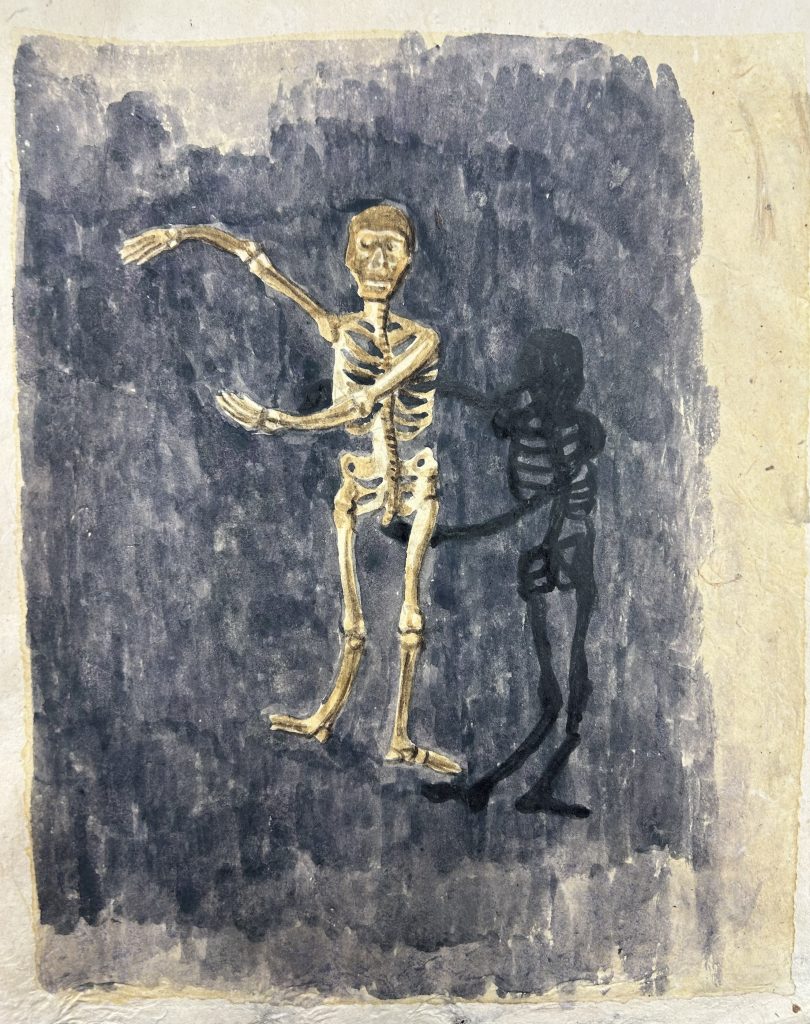
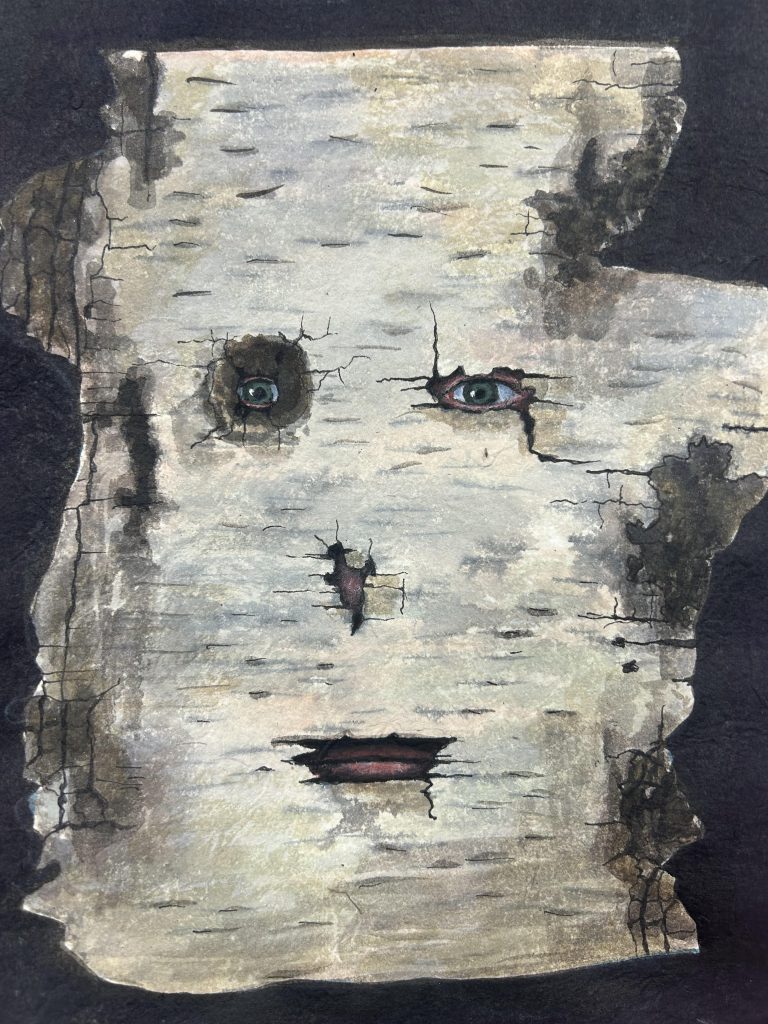
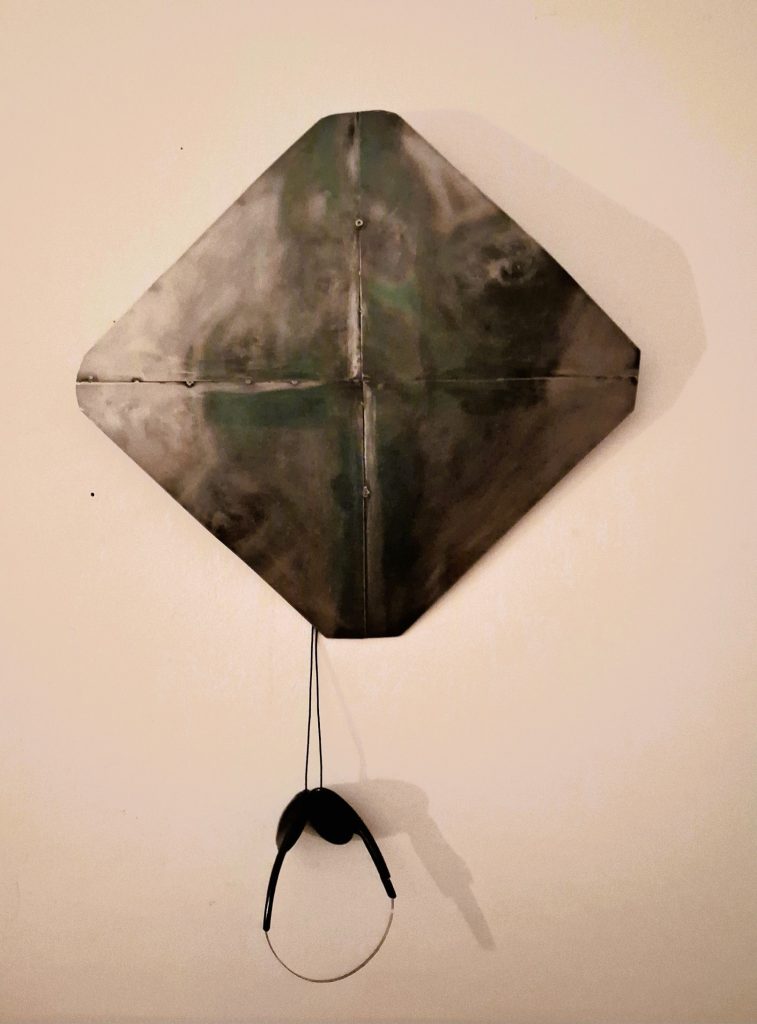
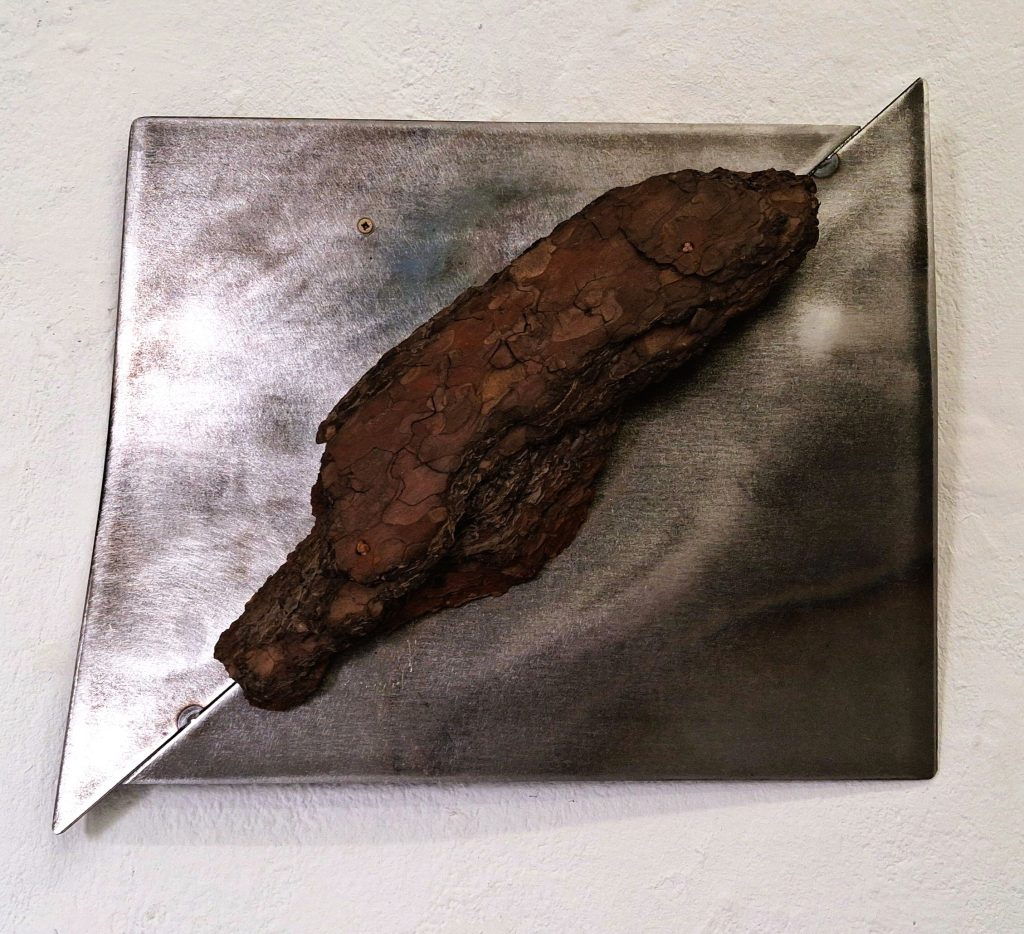
Pilvi Ojala: LuurankotanssiPilvi Ojala: NaamioMargret Holz: Speaking Shadow FragmentMargret Holz: Shadow Fragment with Bark, steel
Margret Holz
For decades, Margret Holz has devoted herself in her multifaceted work to the various effects of time on history, on the memory of historical and fictional places, and very tangibly as an influence on sculptural material. With the sculpture »Fallen shadow 01«, the sculptor shows a folded-down surface that exhibits amorphous, shadow-like shapes in deformed steel. What we see here is the slow and concentrated penetration of heat through fire into the material of steel, through the controlled and precise work of the sculptor. The formerly uniform surfaces deform under the power of the heat, and the color nuances of the shadows testify to the formative and also destructive, archaic power of fire. In Margret Holz’s minimalist sculptures, sculptural action materializes, which can be read both as a burn mark and as a metaphor of imprinted time for the unrepresentable shadows of history.
In her decades-long work, the shadows of memory materialize, become tangible and present, and cast a metaphorical light on possible future traces of crises of transnational and ecological entanglements, border demarcations, and the vulnerability of open social and natural systems.
Margret Holz, born in 1942, studied textile design at the University of Applied Sciences for Art and Design Hanover and painting and sculpture at the HdK Berlin, now UdK Berlin. Sculpture, photography, and printmaking are the main areas of work. Exhibitions in Germany, Poland, France, Belgium and Switzerland. She lives and works in Berlin. Margret Holz is a member of the German Artists’ Association, sculpture network, and the women artists’ network Frauenmuseum Berlin. www.mabois.de @margretholzbois (instagram)
Deutsch
„Margret Holz widmet sich in ihrem vielgestaltigen Werk seit Jahrzehnten auf unterschiedlichste Weise dem Einwirken von Zeit auf Geschichte, auf das Gedächtnis von historischen und fiktiven Orten und ganz haptisch als Einwirkung auf das bildhauerische Material. Mit der Skulptur »Fallen shadow 01« aus ihrem Projekt Shadow phenomena zeigt die Bildhauerin eine abgeklappte Fläche, die amorphe, schattenartige Formen aufweist in verformtem Stahl. Was wir hier sehen, ist das langsame und konzentrierte Eindringen der Hitze durch Feuer in das Material Stahl, durch die kontrollierte und präzise Bearbeitung der Bildhauerin. Die ehemals gleichförmigen Flächen verformen sich unter der Kraft der Hitze und die farblichen Nuancen der Schatten zeugen von der formgebenden und auch zerstörerischen, archaischen Kraft des Feuers. In Margret Holz’ minimalistischen Skulpturen materialisiert sich bildhauerische Handlung, die sowohl als Brandmal als auch als Metapher eingebrannter Zeit für die nicht abbildbaren Schatten der Geschichte gelesen werden können.
In ihrem Jahrzehnte langem Schaffen materialisieren sich die Schatten der Erinnerung, werdengreifbar und gegenwärtig, und werfen ein metaphorisches Licht auf mögliche künftige Spuren von Krisen transnationaler und ökologischer Verflechtungen, Grenzziehungen und der Störanfälligkeit von offenen gesellschaftlichen und natürlichen Systemen.“ Veronika Witte Margret Holz, geboren 1942, studierte Textildesign an der Fachhochschule für Kunst und Design Hannover und Malerei und Bildhauerei an der HdK Berlin, jetzt UdK Berlin. Skulptur, Fotografie und Druck sind die wesentlichen Arbeitsbereiche. Ausstellungen in Deutschland, Polen, Frankreich, Belgien und der Schweiz. Sie lebt und arbeitet in Berlin.
Margret Holz ist Mitglied im Deutschen Künstlerbund, sculpture network und dem Künstlerinnennetzwerk Frauenmuseum Berlin. www.mabois.de @margretholzbois (instagram)
Pilvi Ojala
As a visual artist, I have had the opportunity to experiment with different tools and materials very freely and I feel that I have found my own unique way of making art. Visual art has given me the opportunity to direct my interest in many different themes and subjects. I am for example interested in different ways of presenting things. Among other things, staging, illusions, artificiality and authenticity are themes that fascinate my mind. For me, making art is not only a way to express myself, but also a way of perceiving the world and placing myself as a part of it. I am curious to try new things, and I often switch from one method and media to another, which may seem like an inability to concentrate to some, but for me it is a central motive for making art. During my career, I have moved between different methods and ways of presenting, guided by the theme at hand. As an artist, I want to both continue the tradition and renew myself. Renewal can mean very small things, but it is essential for art to be satisfying to its creator and experiencer. What is important to me is making by hand and appreciating it, as well as general humanity and the attempt to understand the world by observing and paying attention to things. I utilize themes from art history, but I strive to transfer them to a contemporary framework and connect them to my own world of experience. Although my themes often move on the ground of melancholy, I hope that one can find there also warm humor and hope.
Deutsch
Als bildende Künstlerin hatte ich die Möglichkeit, mit verschiedenen Werkzeugen und Materialien frei zu experimentieren, und ich glaube, ich habe meinen eigenen, einzigartigen künstlerischen Weg gefunden. Die bildende Kunst hat mir die Chance gegeben, mein Interesse auf viele verschiedene Themen zu richten. Ich interessiere mich für die Präsentation von Dingen und verschiedene Arten der Präsentation; Inszenierung, Illusionen, Künstlichkeit und Authentizität sind Themen, die mich faszinieren.
Für mich ist Kunst nicht nur ein Ausdrucksmittel, sondern auch eine Möglichkeit, die Welt wahrzunehmen und mich als Teil von ihr zu verorten. Ich bin neugierig, Neues auszuprobieren, und wechsle oft zwischen verschiedenen Methoden und Medien. Das mag manchen wie Konzentrationsschwäche erscheinen, ist für mich aber ein zentrales Motiv für mein künstlerisches Schaffen. Im Laufe meiner Karriere habe ich, geleitet vom jeweiligen Thema, verschiedene Methoden und Präsentationsformen ausprobiert. Als Künstlerin möchte ich Traditionen fortführen und mich gleichzeitig erneuern. Erneuerung kann in kleinen Dingen bestehen, ist aber wesentlich dafür, dass Kunst sowohl ihren Schöpfer als auch den Betrachter zufriedenstellt. Mir ist wichtig, mit den Händen etwas zu erschaffen und das Ergebnis wertzuschätzen, ebenso wie die Menschlichkeit im Allgemeinen und der Versuch, die Welt durch Beobachtung und Achtsamkeit zu verstehen. Ich greife auf Themen der Kunstgeschichte zurück, bemühe mich aber, sie in einen zeitgenössischen Kontext zu übertragen und mit meiner eigenen Erfahrungswelt zu verbinden. Obwohl meine Werke oft von Melancholie durchzogen sind, hoffe ich, dass auch ein Hauch von Humor und Hoffnung mitschwingt.
Open on Kolonie Weekend: Sunday 01.03. : 2-6 pm | 14-18 Uhr
Exhibition | Ausstellungsdauer: 1.–21.03.2026
Sonic Wonderland – Visuo-Acoustic Simulations of Echoing Rocks
Jami Pekkanen, Julia Shpinitskaya, Noora Vikman, Elina Hytönen-Ng, Gjermund Kolltveit, Riitta Rainio
Sonic Wonderland’s visuo-acoustic simulations take visitors to some of Finland’s most stunning acoustic environments: the echoing rock paintings of Siliävuori and the resonant cavity of Hiidenkirnukivi. Digital modeling and auralization methods conjure up what these sacred sites of the past look and sound like. The simulations are interactive, which means that in order to hear the echoes, visitors must produce sound themselves, for example by calling out, clapping, or playing the instrument
The SacredSounds research project, funded by the Kone Foundation (2023–2027), traces and highlights the unrenowned acoustics heritage of Fennoscandia. Researchers from the Universities of Helsinki and Eastern Finland perform acoustic measurements at cliffs, boulders, caves, and gorges held as sacred or special, and document the sites using LiDAR scanning, aerial videography, and photography. They also conduct archival research and interviews to find out how people have experienced these places at different times.
For the past five years, fish have been my subject matter. Pike-perch, perch, and herrings – sometimes lying on wax paper, sometimes on a plate. What is it about these shiny creatures that fascinates me?
Still-life painting fascinates me. It is about learning to look at things. The history of painting is full of still lifes of fish – silver-sided fish on silver platters, coarse fish scales depicted together with translucent onions, or moist seafood gleaming on the dirty counter of a market stall. As a motif, a fish is loaded with meanings, often Christian ones. Above all, it often seems to reflect the pure joy of painting – the pleasure that comes from seeking light and shine. Of course, fish themselves are intriguing too. Smelly, even repulsive, oblong creatures, strange and mute. Fish are valuable yet unfamiliar, lifted up from beneath the surface for food. The boundary between two worlds is broken just like that.
Most of all, however, I am interested in the similarity. The fish is matter, just like the painting, the viewer, and the painter. The same clammy, speechless substance. By painting fish, I paint all of us – chunks of flesh dragged into this unfamiliar environment without asking.
My sculptures address the experience of life being limited, our dependence on our own physical existence and especially on other people.
A human is part of a human community. The fields of our social interactions largely define the framework of our actions. Even our separation and isolation always stand in relation to others. Our ability to be intimate is the starting point of our existence. Our ability to take care carries us from one generation to another. Independence is inevitable, yet even our independence stands in relation to others, our diverse communities.
As neither the fields of interaction surrounding us nor our relations to others can be physically touched by the hand, we need sculptures to concretize these abstract experiences. In my view and experience, a sculpture still is a functioning means of symbolic thinking for human communities. In practice, this has already been the case since early cult objects. Creating a sculpture is slow, at least for me. My themes develop slowly, if at all. My topics of limitations and dependence on others intertwine and reveal themselves repeatedly. The material’s resistance is important to me. The physicality of creating a work is often enjoyable. The slowness in working with the material and the physical effort create time for thinking and for the opportunity to calmly solve sculptural problems.
I tend to get the impression that the slowness in making a sculpture does not prevent, but in fact assists the sculpture opening up to its viewer as an abrupt experience, even resembling a physical shock. The viewer is important to me. The sculpture is a means to communicate with and within the community.
Maija Helasvuo Sculptor, MFA
Deutsch e Übersetzung des Textes von Maija Helasvuo:
Meine Skulpturen thematisieren das Erlebnis der Begrenztheit des Lebens, unsere Abhängigkeit von der eigenen physischen Existenz und insbesondere von anderen Menschen. Ein Mensch ist Teil menschlicher Gemeinschaft. Unsere sozialen Interaktionsfelder bestimmen zu großen Teilen die Rahmenbedingungen unseres Handelns. Sogar unsere Abgrenzung und Isolation stehen immer in Beziehung zu anderen. Unsere Fähigkeit zu Intimität ist der Ausgangspunkt unserer Existenz. Unsere Fähigkeit sich um andere zu sorgen trägt uns von Generation zu Generation. Selbstständigkeit ist unabdingbar, und doch steht auch sie in Beziehung zu anderen, zu unseren vielfältigen Gemeinschaften.
Da wir weder die uns umgebenden Interaktionsfelder noch unsere Beziehungen zu anderen mit den Händen greifen können, brauchen wir Skulpturen als eine Konkretisierung unserer abstrakten Erlebnisse. Ich fühle und sehe Skulpturen weiterhin als funktionierendes Mittel des symbolischen Denkens menschlicher Gemeinschaften. Tatsächlich gilt dies bereits seit frühzeitlichen Kultobjekten.
Galerie/Projektraum TOOLBOX Koloniestraße 120 13359 Berlin-Wedding U-Bahn Osloer Straße
An Feiertagen ist die Toolbox geschlossen On Bank holidays Toolbox is closed
Open on Kolonie Weekend: Saturday 31.01. and Sunday 01.02. : 2-5 pm | 14-17 Uhr
Exhibition | Ausstellungsdauer: 30.01.–22.02.2026
Finissage: 22.02.2026: 5 pm | 17 Uhr
Toolbox presents an exhibition with works from Jürgen Baumann and Dietrich Walther, both Berlin artists.
J. Baumann works in extreme proximity to the real object and thus defines a very small image section, while D. Walther draws his image sources as found footage from the depths of the World Wide Web, but limits the reduction of image information to content that is recognisable as a body.
Both of us allow our objects to undergo a transformation that, in the montage, creates something new as a tableau or even as a multi-part image that no longer has much to do with the original image source.
Both of us work with the human body, which, as we show it, can certainly create uncertainty and discomfort.
The recipients of these works must engage in an interplay between viewer and viewed, proximity and distance. They experience the deconstruction and reconstruction of human bodies and are ultimately encouraged to examine their own economy of attention, which is increasingly characterised by scrolling through a flood of images from the internet.
Deutsch
Dietrich Walther und Jürgen Baumann präsentieren eine Ausstellung in der die einzelnen Arbeiten einen intensiven konfrontativen Dialog führen. In räumlicher Trennung und in unmittelbarer Nähe zueinander. Dadurch wird das Trennende und Verbindende der beiden künstlerischen Positionen sichtbar.
J. Baumann arbeitet in extremer Nähe zum realen Objekt und definiert somit einen sehr kleinen Bildausschnitt, D. Walther bezieht seine Bildquellen als Found Footage aus den Tiefen des World Wide Web, beschränkt die Reduktion von Bildinformationen aber auf als Körper erkennbare Inhalte.
Beide lassen wir unsere Objekte eine Transformation durchleben, die in der Montage als Tableau oder auch als mehrteiliges Bild Neues entstehen lässt, das mit der ursprünglichen Bildquelle nicht mehr viel zu tun hat. Beide arbeiten wir mit dem menschlichen Körper, der, so wie wir ihn zeigen, durchaus Verunsicherung und Unbehagen erzeugen kann. Die Rezipient*innen dieser Arbeiten müssen sich einlassen auf ein Wechselspiel zwischen Betrachter und Betrachtetem, Nähe und Distanz. Sie erleben die De- als auch Rekonstruktion menschlicher Körper und werden letztendlich angeregt, ihre eigene Aufmerksamkeits-ökonomie zu überprüfen, die zunehmend vom durchscrollen einer großen Bilderflut aus dem Netz geprägt ist.
Galerie/Projektraum TOOLBOX Koloniestraße 120 13359 Berlin-Wedding U-Bahn Osloer Straße
An Feiertagen ist die Toolbox geschlossen On Bank holidays Toolbox is closed
Welcome to our opening on Friday, 29. August 2025, 7 pm
Artists
Alexander Horn | Ilkka Sariola
Paitings, drawings
Opening hours: Mit–Sat 3–7 pm
——
Our duo exhibition is titled ”Ausgang – Exit”. Everyday definition of the word is ”an act of leaving a place” or ”a way out of a building”. For example there are ”Ausgang” signs in everywhere in metro stations and signs can save lives in the event of fire. The word exit also has deeper philosophical connotations. ”Exitus” comes from latin and means exit, ending, end or death. Our final exit is moving from on state to another, from life to death. The Nazis used the term with cruel irony, calling the entrance gate of Sachsenhausen concentration camp ”Eingang A” an the exit gate ”Ausgang Z”. There is also a desperate search for away out, exit, of the protracted wars in Ukraine an Gaza. In our exhibition, metaphora ”exit” leads the viewer to consider different ways of of exiting dead ends in front of Alexander Horn´s fascinating paintings and Ilkka Sariola´s large expressive coal drawings.
Alexander Horn lives and works in Mannheim and Ludwigshafen and Ilkka Sariola in Helsinki. We met each other for the first time year 2017 when we both took part in group exhibition ”Nachstein” at Projektraum Toolbox. Even then, a deep understanding arose between us an our art. This is our third duo exhibition in Germany.
Ilkka Sariola, rom series Requiemm Hind & Shani, 230 x 150 cm, charcoal on paper, 2023-2025
Alexander Horn, aus der Serie Only the Rocks Remain
German:
Unsere Duo-Ausstellung trägt den Titel Ausgang – Exit. Eine Alltagsdefinition des Wortes ist „ein Akt des Verlassens eines Ortes“ oder „ein Weg aus einem Gebäude“. So gibt es zum Beispiel überall in U-Bahn-Stationen „Ausgang“-Schilder, und Schilder, die auf Notausgänge hinweisen, können im Falle eines Brandes Leben retten. Das Wort Ausgang hat auch eine tiefere philosophische Bedeutung. „Exitus“ kommt aus dem Lateinischen und bedeutet Ausgang, Abschluss, Ende oder Tod. Unser letzter Ausgang ist der Übergang von einem Zustand zum anderen, vom Leben zum Tod. Die Nazis benutzten den Begriff mit grausamer Ironie und nannten das Eingangstor des Konzentrationslagers Sachsenhausen „Eingang A“ und das Ausgangstor „Ausgang Z“. Auch in den langwierigen Kriegen in der Ukraine und im Gazastreifen wird verzweifelt nach einem Ausweg, einem Ausgang, gesucht. Die Besucher:innen unserer Ausstellung können vor Alexander Horns kleinformatigen Gemälden in Acryltusche auf MDF und Ilkka Sariolas großformatigen, expressiven Kohlezeichnungen mit der Metapher „Ausgang“ als Ausgangspunkt über Sackgassen und wie man aus ihnen wieder heraus-kommt reflektieren.
Alexander Horn lebt und arbeitet in Mannheim und Ludwigshafen, Ilkka Sariola in Helsinki. Wir sind uns 2017 zum ersten Mal begegnet, als wir beide an der Gruppenausstellung Nachstein im Pro-jektraum Toolbox in Berlin teilgenommen haben. Sofort hatten wir das Gefühl eines besonderen und tiefen Verständnisses füreinander und für die Kunst des anderen. Dies ist unsere dritte Duo-Ausstellung in Deutschland.
Galerie/Projektraum TOOLBOX Koloniestraße 120 13359 Berlin-Wedding U-Bahn Osloer Straße
An Feiertagen ist die Toolbox geschlossen On Bank holidays Toolbox is closed
Welcome to our opening on Friday, 25. July 2025, 7 pm
Artists:
Peter Hock (Berlin) and Mika Karhu (Finland)
Exhibition: 26.07.–23.08.2025
Opening hours: Mit–Sat 3–7 pm
The Compulsion to Name and Art’s Resistance: On the Difficulty of Viewing Peter Hock’s (b. 1962) charcoal drawings
Art challenges us in a way we are not always willing to admit: it forces us to dwell in uncertainty, discomfort, without the protection of conceptual frameworks. This challenge is vividly embodied in Hock’s art, where the experience of viewing his work becomes a site of tension. The viewer wants to name—but cannot. Hock’s pieces offer no clear categories, no space for simple classification or interpretation. They move along the boundary between the recognizable and the unrecognizable, from one form to another, from the natural to the alien. This refusal of unambiguousness is not an obstacle to understanding, but rather its condition: it is precisely the indeterminacy that opens the possibility for a deeper experience.
Our culture is deeply rooted in the power of naming. By naming things, we define them, organize them, give them a manageable form. Naming brings a sense of safety—it is a human way of keeping chaos at bay. But at the same time, naming can also exclude, reduce, and flatten. When art, like Hock’s work, resists naming, it not only irritates the viewer but also reveals something fundamental about ourselves: our desire to control what we do not understand.
This insight into the double nature of naming—as a source of safety and simultaneously a form of limitation—raises a profound philosophical question: to what extent is understanding based on appropriation, and to what extent on the willingness to remain open to what exceeds language? Naming involves power. When we name, we draw a boundary—on this side lies the known and controlled, on the other the foreign, the undefined, perhaps even the threatening. The unnamed is left without a place in our shared system, and for that reason it unsettles us.
An artwork that refuses to be explained challenges this order. It does not provide a ready-made framework of interpretation but forces the viewer to tolerate ambiguity. This kind of ambiguity cannot be resolved by intellectual effort; instead, it must be inhabited. One must look without understanding—listen without immediately translating what is heard into words. This experience can even be therapeutic, as it dismantles the modern mind’s compulsion for control.
Mika Karhu
The world stutters.
It is full of opposing opinions that contradict the facts of the world. Instead of facts, people talk about values and imagine that values themselves become facts if one just wishes, believes, and wants hard enough.
The world stutters. It cries out for the help of intellect, but that voice is silenced—into the cavities of silence and stupidity, hidden among cobwebs. The hair follicles of foolishness ooze with the defiance of word-bodies resting on beliefs. Beliefs whose destructive energy and burning pain points are stale clichés about politics, race, economy, art, and sexuality.
Double standards build mental architectures through which people navigate their social world. They shape their actions according to habits of prejudice and routine assumptions. So human—and as Nietzsche said, “there is too much human in man.”
What is hypocrisy, where an individual or group publicly presents certain moral values or principles, yet acts in direct contradiction to them? Why does someone preach strict morality, yet behave immorally themselves—or demand behavior from others that they do not follow in politics, religion, or everyday life?
Why do people set public moral standards but follow them only when it benefits or serves their interests? Why do individuals feel pressure to conform to certain moral norms outwardly, even if they don’t personally believe in them or want to follow them?
Why might a person be unaware of their own contradictory behavior, or try to justify it to themselves through various rationalizations? Why are certain moral values so deeply embedded in communities or cultures that they are maintained externally, even if individuals do not find them personally meaningful?
Why is hypocrisy used as a means to maintain power or control over others, even though such behavior ultimately serves only self-interest? And why does hypocrisy erode trust and credibility, causing conflict and distrust between individuals and groups?
No wonder the world stutters.
——
Galerie/Projektraum TOOLBOX Koloniestraße 120 13359 Berlin-Wedding U-Bahn Osloer Straße
An Feiertagen ist die Toolbox geschlossen On Bank holidays Toolbox is closed
Welcome to the opening on Fri, May 30, 2025 at 7pm
Exhibition: 30.05.–21.06.2025 Open on Kolononie Wedding weekend: Sun.: 01.06.2025 from 2–6 pm opening hours: Wed-Sat 3-7 pm
.. AND BEYOND THE INFINITE is a collaboration between the Mannheim gallery Strümpfe and the German-Finnish art space Toolbox. Twelve artists from Berlin, Heidelberg and Mannheim, whose works are presented both in the Toolbox and in the art.endart project space, form the basis for the first part of this collaboration, in the course of which artists from the Toolbox will then be guests at the Strümpfe Gallery in Mannheim in September. The title of the exhibition encompasses both the uniqueness of the individual positions – caricature-like representationalism meets abstract finesse – as well as the interdisciplinary abundance (painting, drawing, plasticine, photography, object and video) of the exhibits themselves.
Participating artists: Patrick Huber (B), Mitsuko Hoshino (Hd), Inessa Siebert (Hd), Jutta Steudle (Ma), Line Wasner (B), Annalena Winkler( Ma), Eric Carstensen (Ma), Jürgen Eisenacher( B), Alexander Horn (Ma), Henrik Jacob (B), Heiko Sievers (B) and Fritz Stier (Ma).
Artwork: Analena Winkler: Concert, 2024, Graphit/Papier, 28 x 42 cm.
German
Willkommen zur Eröffnung am Fr, 30. Mai 2025 um 19 Uhr Ausstellung: 30.05.-21.06.2025
Geöffnet am Kolononie Wedding Wochenende: So.: 01.06.2025 von 14-18 Uhr Öffnungszeiten: Mi-Sa 15-19 Uhr
.. AND BEYOND THE INFINITE ist eine Kollaboration der Mannheimer Galerie Strümpfe und dem deutsch-finnischen Projektraum Toolbox. Zwölf Künstlerinnen aus Berlin, Heidelberg und Mannheim, deren Arbeiten sowohl in der Toolbox als auch im Projektraum art.endart präsentiert werden, bilden die Basis für den ersten Teil dieser Zusammenarbeit, in deren Folge Künstlerinnen der Toolbox dann im September in der Galerie Strümpfe in Mannheim zu Gast sein werden. Der Titel der Ausstellung umschließt sowohl die Einzigartigkeit der einzelnen Positionen – karikaturhafte Gegenständlichkeit trifft abstrahierende Finesse – als auch die spartenübergreifende Fülle (Malerei, Zeichnung, Knetbild, Fotografie, Objekt und Video) der Exponate selbst.
Teilnehmende Künstlerinne und Künstler: Patrick Huber (B), Mitsuko Hoshino (Hd), Inessa Siebert (Hd), Jutta Steudle (Ma), Line Wasner (B), Annalena Winkler( Ma), Eric Carstensen (Ma), Jürgen Eisenacher( B), Alexander Horn (Ma), Henrik Jacob (B), Heiko Sievers (B) und Fritz Stier (Ma).
Artwork: Analena Winkler: Concert, 2024, Graphit/Papier, 28 x 42 cm.
——-
Galerie/Projektraum TOOLBOX Koloniestraße 120 13359 Berlin-Wedding U-Bahn Osloer Straße
An Feiertagen ist die Toolbox geschlossen On Bank holidays Toolbox is closed
Alexei Gordin – Anna Emilia Järvingn – Jussi Kekkonen – Jussi Pyky
Opening: Fri, 25.04.2025, 7 pm Open on Kolononie Wedding weekend: Sun.: 27.04.2025 from 2–6 pm 25.4.-24.5.2025 opening hours: Wed-Sat 3-7 pm
Drawings and paintings From Europe’s outskirts, From the fringes of culture, And from the edges of the mind. The exhibiting artists are Alexei Gordin (EST), Anna Emilia Järvinen (FI), Jussi Kekkonen (FI) and Jussi Pyky (FI). The exhibition has been supported by the Finnish Cultural Foundation.
——-
Galerie/Projektraum TOOLBOX Koloniestraße 120 13359 Berlin-Wedding U-Bahn Osloer Straße
An Feiertagen ist die Toolbox geschlossen On Bank holidays Toolbox is closed